Showing posts with label blu-ray. Show all posts

Friday, June 26, 2015

Mad Max (1979) Blu-ray review

Long before Mel Gibson was one of the biggest actors in the world, and long before post-apocalyptic films featuring marauding gangs of lunatics were churned out by the dozen, there was Mad Max (1979). In writer/director George Miller’s seminal film, the world hadn’t quite gone to hell yet – that would be saved for the (arguably) best film in the series, Mad Max 2 (1981, a.k.a. The Road Warrior) – but the writing was seared onto the walls. Miller’s dystopian wasteland set a tone and visual palette that has seen more copies than a Xerox machine. And, really, where better to film such a sparse dust bowl future than the Australia of 1979? Half the country is one big desert already. What really gives Mad Max the power of longevity is the strong characterization, with each actor bringing a distinct flair to their respective roles. Additionally, there’s a real sense of danger here – anyone could be a victim at any moment, and even Max’s fate isn’t assured as he attempts to do his job amidst a maelstrom of violence.

Opening “a few years from now…” the film joins in on the hot pursuit of a wanted cop killer, known as the Nightrider (Vincent Gil), who so far has managed to successfully evade the Main Force Patrol (MFP) officers in tow. But he isn’t so lucky when Max Rockatansky (Mel Gibson) gets on his tail, ending with the Nightrider’s fiery death. An energy crisis has left much of the Outback low on fuel and sparsely populated, with motorcycle gangs patrolling the streets and terrorizing citizens. The MFP’s main directive is to keep the highways safe and stop the gangs by any means necessary. Their job is made very difficult, however, due to political red tape and crooked lawyers who lobby hard for their scummy clients. Max’s partner, Goose (Steve Bisley), loses his cool when a suspect he knows is guilty winds up being released due to a technicality. Later on, that same suspect, Johnny “the boy” Boyle (Tim Burns), is egged on by the gang’s leader, Toecutter (Hugh Keays-Byrne), to horribly burn Goose while trapped in a wrecked car they helped demolish. Max is stricken with grief after seeing his partner’s wounds and quits the force. He’d rather spend his days traveling with his wife (Joanna Samuel) and new baby, enjoying the countryside. But when an unexpected run-in with Toecutter and his gang rips Max’s idyllic world right in two, the former MFP officer becomes focused on only one thing – brutal and swift revenge.

If there’s one aspect of Miller’s film that helped make it a massive success (other than Gibson’s laconic, magnetic performance), it’s the stunt work. Mad Max has fast cars, lots of ‘em, and more often than not they wind up in a crumpled heap on the hot asphalt. Adding to the impact of those stunts is the very clear indication that many did not go as planned, but since they had one shot in some instances however the stunt went is how it wound up in the film. When the Nightrider’s car collides with a petrol truck, it’s pretty obvious the car veered off course and didn’t hit the mark, which actually makes the stunt even scarier. And then there are also the numerous motorcycle stunts. During one such stunt, as seen in slo-mo, a wheel smacks the back of the stuntman’s helmet so hard you’d think he died on set. He didn’t, but he was definitely worse for the wear. Miller managed to outdo the stunts seen here when he made this film’s sequel, but for a first-time director this was some big stuff.

It would be interesting to see how today’s audiences – especially those who seem to need every detail of backstory explained ad nauseum - would react to Mad Max were it released today. Aside from the opening scrawl explaining the energy crisis, there’s very little history provided for the MFP, Max or the vicious gangs. I feel this only strengthens the film. Miller provides a solid framework within which these characters operate, and any reasonably sharp viewer should be able to fill in any gaps and make sense of how we’ve arrived at this situation. Just like Max, viewers are thrust into this savage land where danger lurks around every bend in the road. In particular, the Toecutter is an enigmatic force who controls his henchman with a firm grasp despite very little violence on his part. It makes you wonder what his story is. I mean, the guy is called “Toecutter” yet we never see him actually cutting off any toes. This sort of ambiguity would carry on through the series, and Miller always handles it perfectly. Here’s to hoping Max’s resurrection (albeit in a new form) is just as thrilling in Mad Max: Fury Road (2015).

There’s been a great deal of scuttlebutt on the web regarding Scream Factory’s 2.35:1 1080p image. Specifically, whether or not it’s any better than MGM’s previous Blu-ray edition, which was perfectly serviceable but far from perfect. As far as anyone knows the negative has been lost, meaning it would be difficult to improve upon what’s already been released. Unless you’re an obsessive about picture quality and go through a film frame-by-frame analyzing individual hairs and shrubs in the background, chances are you’ll find this edition to be on par with MGM’s release, if not a tad lesser. It does appear that some mild DNR has been applied, leaving skin tones looking occasionally waxy, and the grain structure is… odd; it’s not a visual eyesore but it doesn’t exactly look natural. Still, contrast is generally strong, with good color saturation and appreciable detail in many shots.

There are three tracks from which to choose here – Australian DTS-HD MA 5.1 surround sound or 2.0, as well as the infamous(ly bad) English DTS-HD MA 2.0 dub. The multi-channel Aussie option is your best bet, offering up a dynamic experience featuring great panning of effects and engine roars along with a decent low end during some of the more bombastic sequences. Dialogue has a bit of a reverb thing going on at times, though it never happens often enough to be a problem. Subtitles are included in English.

The audio commentary doesn’t feature the names you’d probably prefer to see – specifically, Miller and Gibson – but it does offer up a perspective from art director John Dowding, director of photography David Eggby, special effects artist Chris Murray and film historian Tim Ridge. Given the jobs of the men involved here, this track offers up a great perspective on the film’s production on a much more technical level. With so many people on the track, the energy remains high and talk stays lively and informative.

“New Interviews with Mel Gibson, Joanne Samuel and Director of Photography David Eggby” (HD) runs for almost thirty minutes. Although nothing too revelatory comes out of these talks, it’s wonderful to hear Gibson speak about the role that launched his career. Mel is candid as ever, brimming with enthusiasm and seemingly stoked to be talking about this seminal film so many years later. Samuel has some great anecdotes about her casting, while Eggby discusses the film’s wild stunt work and dangerous environments.

“Mel Gibson: The Birth of a Superstar” (SD) is a featurette that was included on the previous MGM special editions and covers Mel’s career, from his humble beginnings in Australia right up to his massive career in Hollywood. There’s a lot of gushing and glad-handing, with talk of what makes Mel different from other stars.

“Mad Max: The Film Phenomenon” (SD) is another carryover, obviously focusing on Miller’s film and how it set off a chain reaction of productions centering on post-apocalyptic/dystopian future films.

Two theatrical trailers are included, along with TV spots and a large still gallery, all in HD.

The Voices (2014) Blu-ray review

Ryan Reynolds’ career seems to be in a constant state of flux. To be fair, that’s the story for many actors, but Reynolds has yet to catch a big cinematic break despite nabbing roles in some high profile pictures. Unfortunately, those pictures were titles such as Green Lantern (2011) or X-Men Origins: Wolverine (2009). And the less anyone ever says about Blade: Trinity (2004) the better. So, whether because of his big budget bombs or not, Reynolds has been delving into the world of DTV and killing it – literally. He dabbled in playing a mentally unstable character before, with The Amityville Horror (2005) remake, but in The Voices (2014) he veers off into full-on serial killer territory. Think of it as if Patrick Bateman moved out of NYC, got a minimum wage job at a factory and adopted a couple of pets. Add in copious amounts of pitch black humor and the end result is something that’s likely to hit my top ten list once the year is through.

There isn’t a lot to worry about when you’re living in Milton. The quiet suburb is home to a bustling fixtures factory, where Jerry (Ryan Reynolds) is just another happy cog in the corporate wheel. He’s a bit socially awkward but always well-meaning and willing to help out. When he’s asked to assist with planning a little corporate picnic, Jerry agrees; at the meeting he finds himself fawning over Fiona (Gemma Arterton), a hot British import who works in finance. A shrink Jerry sees thinks getting out would be a good thing… assuming he’s still taking his court mandated meds. You are taking your meds, right Jerry? Jerry asks Fiona out, and she agrees in the sort of way that a person who isn’t really interested but can’t quickly think of a good reason to say “no” does. This goes over Jerry’s head and he ramps up his excitement. Their date doesn’t go as planned at all, but when the night is through Jerry still manages to find himself on top of Fiona… sticking a knife in her chest. Whoops. Once he does his best to clean up the mess he made, his two best friends – Bosco and Mr. Whiskers (both voiced by Reynolds), his dog and cat, respectively – discuss with Jerry the ramifications of his actions and whether or not he should get back on his meds or just continue killing people because it seems to be what he does best.

This is one of those films where it isn’t a novel story that sucks you in but, instead, it’s the idiosyncrasies of our lead character that wholly carries it. Reynolds’ Jerry is a weird man who does a lot of very horrible, gruesome things to his very personable co-workers (even Fiona isn’t a complete bitch), but it’s because Reynolds exudes a boyish charm, aided by being easy on the eyes (or so my girlfriend constantly tells me) and you’ve got a serial killer who, again, is not dissimilar to Patrick Bateman in that you can find him almost sympathetic despite his actions. Unlike Bateman, though, Jerry is supposed to be taking meds due to a childhood incident. When he’s off them, that’s when the film immediately thrusts viewers into the dark, decrepit world in which Jerry truly lives. But that place is no fun! Jerry prefers to exist in a fantasy land where everything is in its rightful place, but it’s only visible when he’s not sucking down his prescribed dosage; plus taking those pills means his two best friends – the dog and cat – are nothing more than regular house pets. Jerry’s continually unstable mental state keeps the film feeling fresh right up to the end because his behavior is so unpredictable. Even when you’re expecting him to perform certain actions, watching how Jerry surveys a scene and comes to his decisions based on such ill logic is wonderfully displayed.

The supporting characters serve little function aside from moving the plot along and putting Jerry where he needs to be. Still, credit is due to Anna Kendrick for playing a potential love interest for Jerry, although Jerry is completely clueless in regard to picking up on her obvious hints. There’s usually something a bit too twee about Kendrick for me, but she’s perfect here and a great fit for Jerry since she seems a bit “off”, too. Of course, the film still finds a way to showcase her singing abilities; at least it’s done fittingly.

Who could’ve guessed something this grim and full of gallows humor would come from the Academy Award-nominated director of the French-Iranian animated film Persepolis (2007)? You might’ve if you caught producer Adi Shankar’s name on the back cover, too. He might look like someone opened an Ed Hardy factory in India, yet his filmography shows that he makes bold, original films that usually operate outside the traditional studio chum. The Voices is a dark comedy on the level of John Waters’ Serial Mom (1994), only more gruesome and unsettling. Ryan Reynolds gives a performance that I’d call his best yet and it ends with a choreographed dance for Jesus that is the perfect capper on this off kilter picture.

There’s little fault to be found in the film’s 2.35:1 1080p picture. Lionsgate’s transfer is highly detailed and crisp, displaying a great sense of depth and featuring strong detailing. Contrast is excellent – black levels remain dark and never look hazy. Jerry’s world is always vibrant and bright, with lots of pastels and colorful hues. In contrast, when reality is shown the picture switches to showcase squalid conditions and disgusting living conditions, using darker hues and less lighting. Under all conditions the image holds up beautifully. A few scenes look a tad soft; that’s about the worst I can say.

The English DTS-HD MA 5.1 surround sound track is tremendously effective and engaging. Right from the start the level of immersion is apparent and impressive. Sound effects are well-balanced and separated nicely to allow for audible spacing. The rear speakers are continually aflutter, especially during the thunderstorm when lighting is cracking and thunder booms intensely. The disc also includes a Spanish Dolby Digital 5.1 surround sound track. Subtitles are included in English, English SDH and Spanish.

“The Voices: From Fridge to Frame” (HD) is more or less a typical EPK, just with a bit more information to go around. It doesn’t get too deep although there are interesting takeaways.

“VFX: The Making of Bosco and Mr. Whiskers” (HD) - The animals talk, their mouths move, and it was of the utmost importance that everything look seamless when shown on screen.

“VFX: Comparison Showreel” (HD) - Shot progressions are shown, from the in-camera image right up through once digital elements have been added.

“The Voices of Ryan Reynolds” (HD) - Reynolds makes some funny faces when voicing the film’s animals. Watch him do just that here.

A handful of deleted scenes (HD) are mostly little bits of exposition, with a lengthy scene that would’ve come near the end of the film where he “talks” to his dad.

Extended scenes (HD) add a bit more to Jerry’s job and his disastrous date with Fiona.

A reel of animatics (HD) shows off the film’s storyboards, with off-screen actors voicing the roles.

“Cast & Costume Sketch Gallery” (HD) shows off 18 images of the film’s characters and their looks.

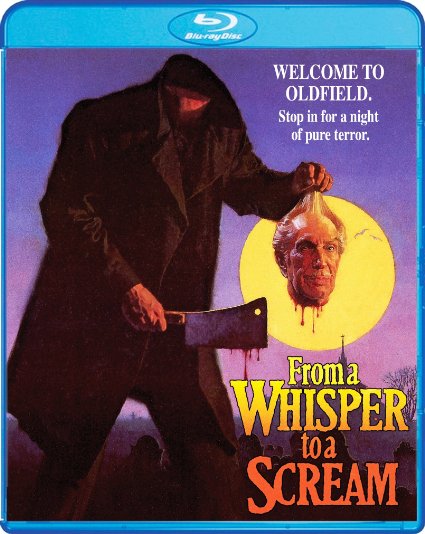
From A Whisper To A Scream (1987) Blu-ray review

Director Jeff Burr has helmed a handful of dubious cinematic achievements in the world of horror – nearly all of them sequels to popular titles – but the only horror film he’s ever directed that he feels is his and his alone would be From a Whisper to a Scream (1987 – a.k.a. The Offspring), his second feature. Personally, I’ve long had an appreciation for Burr’s work and I find him to be a genuinely affable, enthusiastic personality who is brimming with wonderful stories and good ol’ boy charm. Leatherface: The Texas Chainsaw Massacre III (1990) is still my favorite sequel in that series. But on that film, and others such as Pumpkinhead II: Blood Wings (1993) and The Stepfather II (1989), Burr was hampered by studio executives, looming timelines and a near-total lack of creative input or control. The only time he’s enjoyed complete freedom on a horror picture was with From a Whisper to a Scream, a horror anthology that has aged quite well in addition to featuring one of the legendary Vincent Price’s final roles.

Oldfield, TN is a town with a rich history… of evil happenings. On the eve of a murderess’ execution, a local reporter (Susan Tyrell) pays a visit to the town’s historian, Julian White (Vincent Price), who happens to be the uncle of the newly-deceased woman. When pressed by the reporter about his niece’s history of violence, White seems apathetic and resigned. According to him, evil has had a foothold in Oldfield for a very long time and this is simply par for the course. He produces an old journal of tales long forgotten and schools the reporter on the town’s malevolent past.

The first tale, set in modern day, centers on Stanley Burnside (Clu Gulager), an awkward towhead living with his sister. Stanley is desperate for a woman, so he sets his sights high and asks out his boss, Grace (Megan McFarland), who for some reason agrees. After dinner, Stanley gets grabby in the car and, after being spurned, decides the best course of action would be to choke Grace to death. But he never got laid! No matter, once Grace’s funeral concludes Stanley brings some champagne to her coffin and drives in one final nail. But come nine months later he’s in for a shock.

Our second story goes back to the ‘50s, where Jesse (Terry Kiser), a small-time scoundrel, is hiding out from some gangsters he ripped off. Jesse makes a run for it but gets shot before managing to stumble into a rowboat and sail out into the swamp. He awakens in a ramshackle cabin, owned by a genial old black man (Harry Caesar) who nurses him back to health. When the man goes out to town, Jesse, being the scumbag he is, goes through the man’s belongings looking for loot. Instead he stumbles across a life-changing secret, one that he’s foolish enough to go after.

Next up, we travel further back to the ‘30s and visit a carnival, where glass eater Steven (Ron Brooks) performs with a sideshow of freaks. He’s in love with a local girl who has a mouthful of a name, Amarilliss (Didi Lanier), but the controlling owner of the carnival, Snakewoman (Rosalind Cash), refuses to allow him to leave. Steven and Amarilliss attempt to flee, but they both soon realize that Snakewoman’s voodoo powers can reach far beyond the borders of the circus tent.

Finally, the film goes way back to the Civil War, following a trio of men – led by Union Sgt. Gallen (Cameron Mitchell) – who come across a stronghold being commandeered by a group of children. At first they don’t take the children or their code of conduct seriously, but after witnessing what happens to those who disobey Gallen and his men (or, more appropriately, what’s left of them) beg for mercy.

I’ll admit to not being so hot on Burr’s film the first time I saw it. The pacing is deliberate and slow, which I suppose is apropos given the Southern setting, and the stories come across a bit half-baked and lacking succinctness. Upon second viewing, however, my opinion has changed. I found myself drawn into each of White’s tormented tales, appreciating how the film goes further back into the town’s legacy successively to establish a long pattern of weird, evil stuff. The stories are also unremittingly grim, stinging with final moments that barely give you enough time to mentally digest what’s just occurred before moving on to the next wicked tale. Burr and his co-writers each wrote distinct stories that are amazingly strong, given that none of them had ever worked on a feature before.

Additionally impressive is the cast that has been culled, anchored by Price and featuring a few other heavy hitters who were a bit past their prime but certainly added gravitas to what was a low-budget film by filmmakers who has no solid credentials – actors such as Cameron Mitchell, Clu Gulager, Lawrence Tierney and Harry Caesar. Nobody is phoning it in here, either; these guys took their roles seriously and the film is all the better for it. Ok, maybe Mitchell isn’t giving it his all but that’s also part of his twilight years-charm. Price may have later said he regretted taking his role, having grown tired of horror pictures, but his presence adds such prestige it can be seen as invaluable.

Burr and his cohorts may have been almost entirely green in the film industry, but they weren’t in over their heads making From a Whisper to a Scream. As one of the included documentaries shows, they had all been toiling away on Super 8 home movies for years, and this was simply the next logical step. Horror is often an “easy” introductory genre for those looking to break into feature filmmaking. Combining filmmaking know-how with twisted tales, peppered with taboo subjects few outside the European or exploitation market employed, this is a horror anthology that can stand tall among the big boys such as Creepshow (1982) or Tales from the Crypt (1972).

After making it past the opening optical credits, which experience some minor telecine judder, the film’s 1.85:1 1080p image stabilizes to show off a surprisingly strong 35mm picture. What’s most impressive about this transfer are the rich, stable black levels and consistent contrast. Film grain is very much apparent, and very thick, but it never looks clumpy or noisy. The print used here was kept in great shape, with only minor flecks appearing intermittently. To be honest, little imperfections such as those help maintain a filmic appearance, reminding viewers they’re watching a vintage 35mm print, albeit digitally. Bright and sunny daylight shots obviously enjoy the greatest exhibition of details and texture, while the darker shots (which are a majority of the film) do lack crispness and appear much softer. On the major plus side, the film’s practical effects are so awesome in that ‘80s a-step-or-two-above-homemade sort of way, and most manage to retain a level of quality in the jump to HD.

Despite the back cover’s claims, the audio here is not an English DTS-HD MA 2.0 track but, rather, an English LPCM uncompressed 2.0 offering. Does this matter much? It won’t for most. Personally, the most effective aspect to the sound was during the opening credits, when a beating heart quickens in pace as names appear. Jim Manzie’s score is great work because he had to compose distinct music for each of the time periods set within the film. His compositions perfectly complement every era. That aside, this is a fairly routine track featuring a good balance for the dialogue, modest separation and an adequate sound design. Subtitles are included in English.

“Return to Oldfield: The Making of From a Whisper to a Scream” (HD) is a documentary that runs for nearly two hours. Clocking in at almost twenty minutes longer than the film itself, this exhaustive piece uncovers every last bit of information known about all aspects of the film’s production, from start through finish. Burr and his childhood buddies turned fellow filmmakers talk about their respective roles on this film. Each has a lot to contribute, detailing how Burr’s idea to do a road movie somehow turned into a horror picture, the reasoning behind doing anthology, getting Burr’s brother involved to handle business affairs, securing Vincent Price (or almost not), shooting on short ends, and a crew mutiny that threatened the picture. This is easily one of the best making-of pieces Scream Factory has produced.

“A Decade Under the Influence” (HD) is another feature-length documentary, this one running for 1 hour and 17 minutes. Although a bit before my own time, this ode to Super 8 filmmaking still feels like childhood. Burr and his filmmaking friends recount the endless home videos they shot using the relatively inexpensive Super 8 cameras and film. There are lots of clips, in full HD, and they’re really awesome to watch. This is one of the cooler features to wind up on any Blu-ray.

Writer/director Jeff Burr delivers the first audio commentary. Those who have heard a Burr track before know he’s never at a loss for words and there’s so much information racing to come out of his mouth his excitement is palpable. He’s not as redundant as you might think given how much the documentary covers, so this is still worth listening to if you want to know it all.

Next up, writer/producer Darin Scott and writer C. Courtney Joyner are on hand for a track that is no less lively than Burr’s. After discussing actress Martine Beswick’s James Bond series past, these two delve deep into talk of topics ranging from using Roger Corman’s studios to who-knew-who-in-order-to-cast-who in the movie.

A plainly named “stills gallery” is actually a massive collection of every bit of ephemera related to the film, as introduced and commentated upon by Jeff Burr. There’s some really cool stuff in here.

A theatrical trailer is listed among the features yet selecting it yielded nothing but a blank screen. The TV spots, however, worked just fine.

Saturday, March 21, 2015

Invaders From Mars (1986) Blu-ray review

The films of Tobe Hooper have long teetered on the precipice between compelling schlock and wasted opportunity – at least up until around 1986. He hasn’t made a worthwhile feature film in nearly thirty years. Setting aside The Texas Chain Saw Massacre (1974) – which is so perfect it’s like a fluke in his filmography – and Poltergeist (1982) – because… you know – the rest of his output during those twelve years is a mixed bag. Eaten Alive (1977) is a snoozy, campy creature feature. The Funhouse (1981) is arguably the second-best film Hooper has directed; it’s creepy and filled with menace. Post-Poltergeist, Hooper got set up with a plum deal over at Cannon Films, where mega-producer Menahem Golan signed him to a three-picture deal on the agreement that one of the films he made was a sequel to The Texas Chain Saw Massacre. The first of that pact, Lifeforce (1985), is frustratingly mediocre given the story has such a killer concept. And the merits (or lack thereof) of The Texas Chainsaw Massacre 2 (1986) have been widely debated in the years since its release. Despite doing a full turnaround from the original film, dropping the abject horror and veering the franchise into slapstick gallows humor territory, it’s refreshing to see a rare sequel which doesn’t hew so closely to its predecessor.

His second picture, Invaders from Mars (1986), is a remake of the 1953 sci-fi classic of the same name. The screenplay, co-written by Dan O’Bannon, is a faithfully reworked version of the original story written by John Tucker Battle. One night during a meteor shower, young David Gardner (Hunter Carson) sees a U.F.O. land in a field just over the hill from his house. He excitedly runs into his parent’s room to tell them what he’s witnessed, but his exclamation is written off as a plane or a meteorite. His dad, George (Timothy Bottoms), offers to go investigate in the morning. When David awakens, he heads downstairs where he’s met by his dad, who says there wasn’t anything to see over the hill. David’s curiosity only grows, however, when he sees a fresh bruise on the back of his father’s neck. George is also acting… strange, and eventually he goes missing for a day, prompting David’s mother (Laraine Newman) to call the cops. They decide to check for George over the hill. You can see where this is going. George has turned, the cops have turned, and now David’s mother has turned, too. It isn’t long before David isn’t sure who he can trust… unless he sees their neck first.

At school, David manages to befriend one of the few people to believe his story; the school’s nurse, Linda (Karen Black). He and Linda escape the clutches of turned citizens trying to bring them into the alien fold, eventually making their way to military headquarters and alerting the Marines. Led by Gen. Climet Wilson (James Karen), the soldiers set up base camp at David’s home and begin an all-out assault against the invader’s spaceship, which is buried deep under the ground just over the hill.

Hooper has described his Invaders from Mars as a “kid’s film”, and that seems appropriate given how much I enjoyed it as a kid. As an adult, however, the picture’s deficiencies become glaringly obvious. For starters, the direction is wholly bland and uninspired, like Hooper printed every first take and put little effort into bolstering the film with energy or tension or passion. Right from the start, this picture slogs along until the finale. The middle, in particular, is a vast wasteland of ennui galvanized only by the appearance of impressive FX work from masters Stan Winston and John Dykstra. Were it not for their contributions there would nothing to prevent this from being an all-out disaster. There’s no sense of wonder, no excitement of discovery.

It also doesn’t help that Hunter Carson is a terrible actor. Hollywood nepotism is the likely culprit here, as Carson is the son of writer L.M. Kit Carson and Karen Black, one of this film’s stars. Carson ranges from mediocre to terrible, sometimes within the same scene. The biggest issue is he never quite gets into character; every line he reads sounds like he’s acting, or trying to, leaving his dialogue cold and stilted. And he’s in just about every single scene.

The film’s saving grace is in the production design and creature effects. The subterranean alien ship is vast and labyrinthine, with dusty drilled-out walkways sporadically populated by ad hoc rooms set up for “turning” human subjects, weaponry and a command center where the leader resides. The tunnels have a wide berth to accommodate the bulky alien sentinels, who looks like meatballs with mouths. It’s an awkward design that perfectly fits the sci-fi mold of cheesy and creative. Once you learn the suits were operated by having a dwarf strapped to the back of a regular-sized person who was walking backward, it’s almost impossible not to imagine what’s going on inside whenever you watch them walk. The leader alien is rather phallic, with the head set upon a long, er, shaft that pushes out from behind an equally-genital-like opening. All of these aliens are completely impractical and ineffective from a world domination standpoint, but on film they look pretty cool. And, again, they’re the film’s highlight.

Invaders from Mars is exactly the kind of film I loved as a kid, so it’s disappointing that love doesn’t extend to my adult years. In more capable hands this might have been an ‘80s update of a ‘50s classic that nailed the tone, brought some tension and moved at a consistent clip to keep audiences invested. While Hooper’s vision is by no means a bad film, it’s simply a mediocre one that shows its age and constantly reminds viewers where things go wrong. Solid supporting roles filled by veterans like Black and Karen add necessary gravitas, but the task of carrying the film is placed upon Carson’s diminutive shoulders – and he buckles under the weight.

Previously issued by MGM on a muddy DVD in their now-defunct Midnight Movies line, Scream Factory brings Invaders from Mars to Blu-ray with a 2.35:1 1080p image that totally blows away that old release. Shot by cinematographer Daniel Pearl, the picture seen here is atmospheric and nicely captures a suitable ‘50s aesthetic in terms of shot composition and scope. Grain is much finer than on the DVD release, looking very filmic aside from a few interior shots where it spikes, becoming a bit noisy. Colors are bold and well-saturated, much more so than the DVD. Black levels are stable and dark. There is an inherent softness to the edges of the frame, due to the anamorphic shooting process, a minor problem that sometimes extends to the entire shot. Still, this is a major improvement over what came before and fans will be very pleased to see the film looking so sharp.

The original sound mix for the film was mono, and the last DVD has an Ultra Stereo track, but this new Blu-ray edition one-ups that with an English DTS-HD MA 5.1 surround sound track, as well as a 2.0 option, too. The multi-channel option is the clear winner, offering a fuller, robust listening experience. Composer Christopher Young’s score sounds like he’s channeling John Williams at times, lending Hooper’s pic an air of Spielberg to some degree. Wouldn’t be the first time… The track is clean and clear, free from hisses, and offers nicely separated effects across the front end. Rears don’t come into use much, if at all. Subtitles are available in English.

Director Tobe Hooper sits down for an audio commentary, wherein he slips into his casual Texas demeanor and languidly fields questions pertaining to his dealings with Menahem Golan, the genesis of the project, casting decisions and so forth. He comes off a bit spaced out at times, but his information and recollection are both sound.

“The Martians Are Coming! The Making of Invaders from Mars” runs for over 35 minutes. Hooper, FX creature man Alec Gillis and other members of the cast & crew were recently interviewed for this piece, looking back at the time spent on set. Gillis, in particular, has some amusing anecdotes regarding the creatures he helped operate. Featurettes like this are the Scream Factory supplemental bread & butter, and this one is just as good as any other.

“Production Illustrations Gallery from Artist William Stout” features glimpses of the art designed for the film, with the artist discussing how each piece fit into the film. There’s some really great stuff in here.

The film’s theatrical trailer, a TV spot, a collection of storyboards set to the film’s score, and a still gallery round out the extras.

Of note: the MGM Midnight Movies release contained two vintage featurettes on the making of the film, neither of which is included here. I watched both recently and, while a bit redundant, they’re worth fans’ time and feature some great behind-the-scenes footage. So if you are a bonus feature junkie, you’ll want to hang onto that old DVD.

Tuesday, March 17, 2015

Blacula (1972)/Scream Blacula Scream (1973) Blu-ray review

“Say, man, that is one strange dude… who is he?”

He’s Blacula.

In the early ‘70s, black cinema exploded onto screens across the nation when hits such as Sweet Sweetback’s Baadasssss Song (1971) and Shaft (1971) proved there was an audience hungry for urban drama focused on African Americans, offering a glimpse into their world. By the following year of 1972, the number of “blaxploitation” films increased more than fourfold, spawning a new genre and giving a voice to black filmmakers and actors who now had a platform with which to tell their stories. The movement may have only lasted a few years (by 1977 titles were trickling out), but blaxploitation left an indelible mark on cinema and bestowed upon audiences a handful of classic pictures.

One such enduring film is Blacula (1972), the first blaxploitation horror picture. Heavy cues are taken from past Dracula adaptations, but this entry is firmly rooted in African American culture due to the prevalence of jive-talkin’, tweed jackets and afros aplenty. Classically trained actor William H. Marshall stars as the title character, whose actual name is Mamuwalde, an African prince who, in 1780, travels to Transylvania on a diplomatic mission to put an end to the slave trade. There, he meets with Dracula (Charles Macaulay), who not only refuses to help Mamuwalde in his quest but also attacks him and his wife, Luva (Vonetta McGee). Mamuwalde fights back fiercely, but a bite from Dracula seals his fate and, in an ironic twist, sees him turned into a slave who now seeks blood to quench his undying thirst. He’s also rechristened “Blacula” by Dracula, a name which is oddly enough never again uttered during the film. Mamuwalde is sealed up in a coffin, inside a crypt, along his wife, Luva, who eventually dies by her man’s side.

Cut to nearly two centuries later and the contents of Dracula’s castle have been put up for auction, purchased by a couple of interior decorators who have plans for these antiques back home in Los Angeles. Upon arrival, however, Mamuwalde is awakened and quickly dispatches the couple. At the funeral service for one of the men, Mamuwalde inconspicuously watches the mourners, with Tina (Vonetta Williams) catching his eye as the apparent reincarnation of his beloved Luva. When he’s not busy feeding on the citizens of L.A., Mamuwalde is at his charming best, seductively romancing Tina, who is falling under his hypnotic spell. One of Tina’s acquaintances, Dr. Gordon Thomas (Thalmus Rasulala), however, has found bite marks consistent with vampire lore on the neck of a victim, and is convinced there may be one of the undead on the city streets. When Gordon digs up a recently deceased victim and is met by a pair of snarling fangs, his suspicions are confirmed. Working with the police, Gordon takes down a warehouse filled with blood suckers, while Mamuwalde and Tina attempt to flee together and preserve their love.

First and foremost, the onus of the film’s success rests squarely on the broad shoulders of William H. Marshall. The actor’s imposing physique belies his Shakespearean line delivery and effortless charm, bolstered by a smooth baritone voice that should have been cutting slow jam records, a la Barry White. Of interesting note is that Marshall wanted Mamuwalde to be more than just “Black Dracula”, going so far as to see his character’s name was changed from the generic “Andrew Brown” and given a backstory rich in African culture and focused on his attempt to stop slavery. His noble intentions give the film its ironic twist of fate. As with most vampires, Mamuwalde is typical in that he can be oozing seduction one minute, then lapping at an oozing neck like a monster the next. There’s a clear dichotomy to the character, because once he’s in full-on vamp mode his actions are feral and instinctual; the amiable man is left entirely. There’s only one oddity to his performance… The man has been sealed up in a casket since 1780, and when he awakens in present day Los Angeles there isn’t a single scene of his amazement at how the world has changed. A whole helluva lot happened in two centuries, so you’d think the man would show some sense of wonder.

Also atypical for a horror picture is the film’s score, courtesy of composer Gene Page, an arranger for such hit acts as The Four Tops, The Temptations and Barry White. There isn’t a lick of traditional horror movie motifs to be heard. Instead, the score is filled almost exclusively with music endemic to blaxploitation and black culture, giving Blacula a more soulful, funky edge than any other genre picture up to that point. The main theme could have come right out of Shaft, or been on a Brothers Johnson album.

From the Saul Bass-esque title credits right up through the surprisingly gallant, bittersweet ending Blacula has long cemented its status as one of the seminal cult classics of all-time. Even the title has been elevated to use as a colloquialism; any black guy who dresses as a vampire is automatically Blacula. This reminds me of The Simpsons (1989-present) episode where Dr. Hibbert, dressed as a vampire, is called Blacula and exclaims, “Oh, because I’m black and I’m Dracula, that makes me Blacula?” It’s in the cultural lexicon to stay. Complaints the film is amateurish, poorly acted, weak or unsatisfying were made by people who clearly don’t want to have fun with a movie.

Where there’s a hit, there’s usually a sequel, and Blacula got its follow-up just one year later in the form of Scream Blacula Scream (1973). Marshall returns as Mamuwalde, with Pam Grier (who was in the midst of a major hot streak) joining the cast as a potential love interest for the undead prince. Grier plays Lisa, the chosen successor of a late high voodoo priestess who opts for her over Willis (Richard Lawson), the priestess’ immature son. Upset at his dead mother’s decision, Willis acquires the bones of Mamuwalde in hopes that a voodoo ritual will bring the vampire back to life, whereupon he’ll have Mamuwalde do his bidding. The ritual works – but not as Willis intended. Mamuwalde isn’t controllable, and in another ironic series twist Willis winds up the unwitting servant to his conjured Prince of Darkness.

As Willis increases the vamp stable in his home through nightly feedings, Mamuwalde is a man about town, winding up at a party thrown by former detective Justin Carter (Richard Lawson). Justin is showing off his collection of rare African artifacts which, unbeknownst to him, were excavated from the region where Mamuwalde was once prince. Also at this party is Lisa, Justin’s girlfriend and the burgeoning voodoo priestess. She immediately takes a liking to Mamuwalde, who reciprocates because Lisa is incredibly foxy, and because her voodoo powers may be his ticket to lifting the curse which Dracula placed upon him centuries ago. Justin, meanwhile, works with some of his local police buddies to find who’s responsible for a string of murders in the area – murders committed by Mamuwalde, Willis and their growing brood. Things naturally come to a head in the third act, where Justin & co. storm Willis’ home and fight the vampiric residents, while Mamuwalde and Lisa attempt to lift his eternal burden.

Though not as good as the first film, Scream Blacula Scream is a surprisingly worthwhile follow-up that employs another trait common to a handful of blaxploitation films: voodoo. This approach helps differentiate the film enough that it doesn’t feel like a total rehash of events. Stylistically, many similarities are apparent including the opening titles, musical score (by a different composer) and overall aesthetics. Marshall once again plays Mamuwalde with a strong sense of dignity and class, and he flips it completely around when the fangs are bared. This time around Mamuwalde gets to show off a bit of his muscle. In one of the film’s best scenes, a couple of muggers try to get rough with the dark prince. Both quickly learn this was a mistake. And finally, for the first time in the series Mamuwalde actually refers to himself as Blacula, although his declaration doesn’t come until the film is nearly over. It’s funny that he’s christened Blacula at the opening of the first film, yet the name is never heard again until there are around seven minutes left in the sequel.

Blacula and Scream Blacula Scream are both highly entertaining slices of vintage cinema, featuring much of what makes blaxploitation films so damn enjoyable. William H. Marshall adds more gravitas than anyone who hasn’t seen these films would expect, delivering a powerful nuanced performance that, frankly, could have carried into another film or two. All hail Scream Factory for putting together a solid double feature for fans of these funky bloodsuckers.

The 1.85:1 1080p images for both Blacula and Scream Blacula Scream are very similar, with each getting a major upgrade over previous DVD editions thanks to some spiffy HD transfers made at MGM. Each print is immaculate, with extremely few hints of dirt or debris. Detail is highly apparent in every scene, with little background elements enjoying increased clarity. Colors look sharp and well-saturated, and black levels remains mostly stable throughout – a few shot here and there look hazy, nothing terrible. Grain is left in place, giving both films the proper aged ‘70s aesthetic.

Each film features an English DTS-HD MA 2.0 mono track, both of which are clear, clean and free from any hisses or pops. The sound design on these films is hardly dynamic, with a minimum level of separation among different elements. Dialogue sounds a bit low during a couple scenes where location sound was clearly used, though the majority of the tracks present it balanced among effects and music. The musical numbers and source tracks used on the soundtrack sound full and have presence. Subtitles are included in English.

Blacula features a commentary with author/film historian/filmmaker David F. Walker. This guy is prepared, excited and immediately begins rattling off once the picture gets underway, joking that most listeners probably have no clue who he is but he’ll explain why he’s here in a bit. He does, and he also delivers a lot of background information on the film’s production and actors.

Scream Blacula Scream star Richard Lawson provides an interview, running for just over 13 minutes. The actor describes how he didn’t even get the part he eventually wound up playing. He’s also apparently very skilled at reading a light meter based solely on how hot it feels on his skin.

Both films also feature a photo gallery and trailer among their respective bonus features.

Thursday, February 19, 2015

New Year's Evil (1980) Blu-ray review

While Joe Six Pack might wait until Halloween to bust out the scary stuff, horror fans only have one time of year they watch fright films: all the time. Not that it ever gets old, but a sporadic way to break up the monotony is through holiday horrors. Odds are pretty good that if a film is set on a major holiday it’ll be getting a yearly viewing from most diehards… even if it’s terrible. This explains how Uncle Sam (1996) winds up in my player every July 4th. Thankfully, New Year’s Evil (1980) is not terrible, even if it is a fairly run-of-the-mill slasher. The film comes across slightly smarter than expected because it incorporates the normal festivities of New Year’s Eve into the plot, turning moments typically of celebration into fear. It also gets another bonus point for a third act reveal that is unexpected (if not a tad cliché) assuming you haven’t checked the cast list on IMDb and ruined it for yourself – which is exactly what I did.

It’s New Year’s Eve! And all the cool kids are celebrating at a taping of Hollywood Hotline, a punk rock & new wave show hosted by Diane “Blaze” Sullivan (Roz Kelly). The show is hosting a late-night countdown, with bands playing on stage and a dozen people standing by to take phone call requests. Diane gets a call from a “fan” who calls himself “Evil” and states that he will murder someone each time the clock strikes midnight in a different time zone, with her to be the final victim. Diane’s security team puts the building on lockdown and keeps her and her son, Derek (Grant Cramer), secured. Meanwhile, victims begin to arrive one per hour as the first stroke of midnight brings with it a nurse’s death. Evil records his crimes and call the show after the deed is done, playing back his promises. It isn’t long before the trail of bodies leads directly to Diane’s dressing room.

This was a fun movie, even for a first time viewer like me who has seen a hundred slashers. Is it original? Absolutely not, but it is very entertaining in a “14-year-old staying up late to watch USA’s “Up All Night” kind of way”. Having the killer strike at midnight works perfectly as a plot device, and it seems like such a natural choice to play up the film’s holiday ties. Perhaps one of the best aspects to the production is the decision to reveal the killer early on. I always find this a creepier approach than the boilerplate “hide in the shadows for 85 minutes” killers in the majority of slasher films. This guy is fairly debonair, too; think of Ted Bundy and you’re on the right track. Even better, he’s got a streak of John “Hannibal” Smith (leader of The A-Team (1983-1987), as played by George Peppard) in him because he shows up at each victim’s location wearing extremely convincing outfits. His third act skirmish with a biker gang (!) is so preposterous and deliciously B-grade cinema. Don’t forget, folks, this is a Cannon Films production – always expect the outrageous and then some.

If there’s one thing to remember the film by, however, it’s the title song; a damn catchy one, too. New Year’s Evil, as performed by Roxanne Seeman and Eduardo del Barrio, spent four days blaring the opening lines in my head before I could get it out. It plays on the Blu-ray’s menu, it opens the film and it may be used one other time; I’m not sure. It’s one of those infectious tunes that are impossible to shake. With all these vinyl companies putting out obscure soundtracks these days, someone please get this on a 7”.


New Year’s Evil is a perfectly decent slasher movie while also being highly enjoyable to watch for the sheer ridiculousness of it all – making it the ideal choice to pop on with a group of wasted friends on its namesake holiday. Or, perhaps, by yourself, Smirnoff Ice in hand, lamenting another year gone by with no social life to show for it. Either way you’re destined for Fun City.

This is the Blu-ray debut for New Year’s Evil, having previously been issued on a burn-on-demand DVD from MGM. The film’s 1.78:1 1080p image appears to have been faithfully reproduced, for better or worse. This is not a good looking film by any means, but it’s about as cleaned up as it needs to be. The print sourced from MGM is in good shape, with the only real anomaly showing up in the form of a yellow vertical line appearing 1/3 of the way across the screen for three shots. It’s a very minor defect. Line work in the shadows tends to fade into a murky mess, and black levels get pretty noisy when it’s really dark. That’s all the bad stuff. On a positive note, closeups reveal nice little details in faces and clothing textures. Colors are nicely saturated. Other than some grain spikes during night scenes, the majority of the appearance is very filmic.

The English DTS-HD MA 2.0 stereo track has exactly one issue with it, a high-pitched ringing that occurs for around ten seconds at approximately 30 minutes into the movie. That aside, this is a typically competent audible offering from Scream Factory. Dialogue is balanced and discernible, songs have a moderate presence and sound effects are given good weight. There could be a bit more oomph to the sourced music, especially that theme song, but this gets the job done just fine. Subtitles are included in English.

The film’s audio commentary features writer & director Emmett Alston, and it’s a bit on the dry side. Code Red’s Bill Olsen is on hand to moderate the proceedings, which delve into typical production speak about location shooting, budgetary concerns, how Alston got hooked up with Cannon, etc. It’s a subdued affair that even serious fans of the film may find boring.

“The Making of New Year’s Evil” is a behind-the-scenes piece that runs for nearly 40 minutes. This is yet another in a series of winning behind-the-scenes pieces from Scream Factory, featuring interviews with many cast & crew members who offer up all sorts of interesting anecdotes and reminisce fondly on their time making the movie. Stick around through the brief credits for a fun scene at the end.

The film’s theatrical trailer is included in HD.

Monday, February 16, 2015

The Phantom of the Opera: The Motion Picture (1989) Blu-ray review

Confession time: I have never liked theater. The scant few shows I have attended – one of which was a performance of “The Phantom of the Opera” at the Pantages – were well executed and marginally exciting, but there has never been a single time where I felt the urge to take in a show. This apathetic view has extended to cinematic adaptations of musicals, too, although there are unquestionably great films filled with songs. The purpose of this preface is to explain why I’d never watched The Phantom of the Opera: The Motion Picture (1989), despite being acutely aware of it since childhood. As a young horror fan, who wouldn’t have been drawn in by that cover art? It sold the movie as “Freddy: The Musical”, after all, complete with “Freddy” in bold letters on the cover and Englund’s partially-obscured visage looking an awful lot like his signature character. I must’ve passed it a thousand times on the video shelf as a kid and always had the same thought, “Nope, not interested in a musical.”

Oh, what a youthful fool. First off, it isn’t really much of a musical at all. The Phantom’s compositions are obviously a main component of the film, but it isn’t like characters break out into song every time they have a monologue to deliver. And it’s good music, too. Misha Segal’s score has been singled out as one of the film’s strengths, deservedly so. Secondly, this is absolutely a horror movie. If Englund’s presence didn’t make that evident, the choice of Dwight H. Little (he of Halloween 4: The Return of Michael Myers (1988) fame) as director and the use of Kevin Yagher and John Carl Buechler for FX work should make it crystal clear – a great deal of blood will be spilled.

Opening in present day New York City (check out that Tower Records!), Christine (Jill Schoelen) is an opera singer who wants to find something unique to sing for her upcoming audition. She and her friend Meg (Molly Shannon, in her film debut) discover a piece written by Erik Destler, a composer who they learn may have been responsible for a spate of murders in 19th century London. No matter, it’s a great song. Christine sings the piece at her audition, but before she finishes a sandbag crashes down from overhead and knocks her out. She awakens in 1881 London as an operatic understudy to La Carlotta (Stephanie Lawrence), a diva headlining “Faust”. Visions of Erik Destler begin to plague Christine, in which he tells her that only she can sing Carlotta’s parts as they should be performed. An “unfortunate accident” prevents Carlotta from going on that night, and Christine receives a standing ovation after stepping in for her.

The parallels between “Faust” and Destler’s life are then revealed, as it is shown that Destler made a deal with the Devil to ensure his music would be eternal. The catch? His face would be permanently disfigured, allowing people to love him only for his music. He’s also given superhuman strength and is seemingly immortal, so maybe not such a bad deal after all? Destler’s obsession with Christine continues to mount, leaving a trail of bodies in his wake and culminating in an attack on his underground lair in hopes of finally stopping him. Post-attack, we’re whisked back to present day New York City where Christine is waking up from her audition accident to a familiar face…

Jill Schoelen mentions in the bonus features that the film’s failure at the box office was likely due to the fact most horror fans didn’t want to see a musical any more than musical fans wanted to see a horror movie. She’s right there; many horror/comedies fail at the box office for the same reason – genre confusion and disinterest. The stage version may be most closely associated with the title, but this film version hews more to Gaston Leroux’s source novel. The only major change is of locale, from Paris to London, a decision made to give the picture a more “Hammer Studios” aesthetic. Well, that and the signature chandelier scene, which was dropped because Menahem Golan ran out of money. Golan’s name alone should have clued genre fans in to what to expect; the man built a solid career with Cannon Pictures and its hyper-violent films.

One could easily view this film as “Freddy of the Opera” thanks to Destler’s crispy-fried features being brought to life by Kevin Yagher, who handled makeup duties on three A Nightmare on Elm St. films as well as Freddy’s Nightmares (1988-1989). For most of the film Destler hides under a mask made up of the skin from his victims’ faces (he’s skilled at flaying), something he stiches onto himself periodically. When that is removed, however, he looks like Freddy Krueger with extra skin. How could he not?

It’s a shame the planned The Phantom of New York City never came together because this film ends on a sequel-setting note that could have been a worthwhile continuance. I could kick my younger self for not giving this a shot and renting it all those years ago. Thanks to strong FX work, particularly nasty kills and solid performances from horror notables, The Phantom of the Opera is an elegantly vicious retelling of a well-trodden tale. If there’s any downside here, it’s that an unrated cut couldn’t be put together. Apparently much of the gore wound up on the cutting room floor (like, you know, every horror film made around this time) and it would’ve been great to see that FX reinstated. Still, what survives is certainly worth horror fans’ time.

I don’t mind sounding like a broken record in saying Scream Factory has once again delivered a faithful, albeit unspectacular, picture for a catalog release. Maybe not all of their titles get the 2K or 4K treatment, but on the other side of the coin at least they never employ DNR or aggressive new color timing to their releases either. Phantom sports a 1.85:1 1080p image that was sourced from a clean print, free of major defects, dirt and noise. Colors are nicely saturated, especially reds. Grain is moderate and filmic, though it does spike a bit when the scene is in total darkness. As a testament to the FX work, most of the latex skin holds up rather well under the intense scrutiny of HD.

Viewers are given the option of an English DTS-HD MA 5.1 surround sound track or a 2.0 stereo track. Truthfully, to my ears the stereo track appeared more focused and full, while the surround track spreads itself out too thin, resulting in a weak presence and less impact. The film was mixed in Ultra Stereo, making the loss of any rear speaker effects is negligible. Dialogue sounds a bit more present in the 2.0 track as well. The film’s songs carry a decent weight, filling out the front-end assembly nicely. Subtitles are included in English.

The audio commentary track features director Dwight H. Little and star Robert Englund. These two have a great rapport, covering every necessary base including location shooting, relationships with the other actors, the picture’s tone & look and so forth. Definitely recommended if you enjoyed the film.

“Behind the Mask: The Making of The Phantom of the Opera” is a great behind-the-scenes piece that runs for just under forty minutes. Many of the film’s principals – Little, Englund, Schoelen, etc. – are on hand to discuss the film. Scream Factory has a knack for pumping out these highly informative, in-depth pieces on making a film; just about every one they’ve produced has been a perfect complement to its corresponding movie. There’s a lot of history behind this production and the anecdotes fly left & right.

The film’s theatrical trailer, TV spot, two radio spots and a still gallery round out the extra features.

Tuesday, February 10, 2015

Love At First Bite (1979)/Once Bitten (1985) Blu-ray review

Horror and comedy pair so perfectly it’s almost hard to believe it took filmmakers until the 1980s to really start cranking out some pictures. All those years of pent-up humor exploded at that point, resulting in one movie after the next ditching attempts at absolute terror for a heavy injection of humor. It makes sense why the concept gained traction; after years of seeing horror icons taken so seriously many were plum for roasting. Dracula was one such easy target, what with his Eurotrash romanticism, Misfits devilock-esque ‘do and the roster of staples endemic to vampirism (crosses, garlic, etc.). He’d been indirectly blasted once before by Roman Polanksi in The Fearless Vampire Killers (1967), but 1979 would bring about his first real skewering (staking?).

Without delving too deeply into the specifics, know that 1979 was an atypical year for vampires. No less than seven (!) films on the subject saw release that year, three of which are labeled as “Disco Dracula” titles. Just think about that – not only is there a Disco Dracula subgenre, but it grew in triplicate during one year. Kind of amazing, especially when you consider disco was heavily declining by that time. Of those three films released in ’79, the only one that still has much of a cult following is Love at First Bite, starring walking skin cancer anomaly George Hamilton as Count Dracula. Just as Mel Brooks had done five years earlier with Young Frankenstein (1974), which spoofed the original Frankenstein (1931), Love at First Bite takes a direct swipe at Bela Lugosi’s Dracula (1931). It isn’t as precise as Brooks’ film, though, using only characters and concepts while ditching the Transylvanian landscape for New York City’s cluttered streets.

After being booted out of his castle to make way for an Olympic gymnastics training facility, Dracula (George Hamilton) and his faithful insectivore servant, Renfield (Arte Johnson), head off to start a new life in New York City. Not for no reason; Drac has a crush on a magazine cover model who lives there, Cindy Sondheim (Susan Saint James). A mix-up at the airport causes Dracula’s coffin to be temporarily switched with that of a recently deceased black man from Harlem – you know where that joke is headed. Things get sorted out and the Count hits the town in search of his bride-to-be, whom he is convinced he already loves. He & Cindy meet due to his magnetic personality and cocksure charm, but once her guard comes down it’s clear she’s a bit of a mess. She’s sloppy and neurotic and, yet, the Count doesn’t care because he sees her as the reincarnation of his long lost love, Mina Harker.

One fly in his ointment, however, is Cindy’s therapist – and part-time-lover – Rosenberg (Richard Benjamin), who also happens to be grandson to Dracula’s old nemesis Fritz van Helsing. When Rosenberg finds out who has been pursuing Cindy, he runs Dracula through the gamut of apocryphal methods that will supposedly kill the undead vamp. None finds much success. Rosenberg’s very public antics eventually get him arrested, despite his vocal protests that Dracula is a public menace. He’s only taken seriously when a rash of blood bank robberies and sporadic attacks get the attention of the police chief, who authorizes Rosenberg to get back on the trail of Dracula and Cindy.

First off, in case you weren’t aware this release has restored Alicia Bridges’ “I Love the Nightlife” during the show-stopping disco number. Considering that sequence is one of the film’s highlights – and, really, a perfect fit for this sort of film - it’s amazing anyone thought it was even remotely acceptable to remove it in the first place. Yea, I know… music clearances and all that. Still a boneheaded move.

Having never seen the film, I think what surprised me most was the love story, which I had assumed would be half baked so the focus remained on the humor. Instead, it’s a complicated relationship with some genuine ups-and-downs. Dracula is way into Cindy just based on her looks, but his superficial love is immediately tested when it’s shown that Cindy is far from the glamorous, put-together model he envisioned. She’s a lady with some major hang-ups in life. Truthfully, a whole lot of the humor in this film fell flat for me, and I got most of my enjoyment out of watching these two imperfect lovers try to develop an actual relationship.

Part of the humorlessness that pervades this film comes in the form of Richard Benjamin as Rosenberg. He’s just so… stiff, mono-emotive and not really a good actor. There’s a real lag during the second act when so much of the film is following his character around while Dracula takes a bit of a backseat in his own movie. At least Renfield provides some decent laughs; he’s a little less Dwight Fry and more Marty Feldman’s Igor. It’s a fun, albeit dated, film.

Outshining Hamilton’s bronze resplendence is pale Canadian Jim Carrey, in his first theatrical leading role with Once Bitten (1985). This one plays more like a ribald ‘80s teen comedy, full of horny virgins and plenty of un-p.c. humor. In a somewhat coincidental twist, this film sees an actual supermodel, Lauren Hutton, playing the role of a vampire known as Countess. She looks remarkable for someone who’s “400 if she’s a day”, according to her personal assistant Sebastian (Cleavon Little), but the upkeep on those to-die-for looks is a steady supply of virgin’s blood – three sips before Halloween to be precise. Only problem is, finding a virgin in a city like Los Angeles isn’t easy work. Luckily, one of Countess’ nights on the town coincides with high schooler Mark (Jim Carrey) and his buddies’ own evening of prospect searching. Mark’s girlfriend, Robin (Karen Kopins), refused to have sex with him the night before, so he quickly determines the next best option is to find a willing partner somewhere in Hollywood. Countess and Mark hit it off at a singles bar and the two head back to her place almost immediately.

They hook up, although Mark’s recollection of their steamy night is pretty foggy. Did they have sex? She claims so. But now he’s starting to feel weird and act very different. The sun seems too bright. His fashion sense is getting darker. He’s having incredibly bizarre dreams. And he eats raw meat and drinks animal blood without giving it a second thought. Robin is justifiably concerned. When Countess draws blood from Mark a second time, it leads directly to a dance-off face-off between Mark, Countess and Robin (set to an on-the-nose track entitled “Hands Off”). If Countess manages to siphon some virgin blood from Mark just one more time her beauty will endure, but Robin isn’t willing to let her guy go without a fight. It might be a faux pas now, but how can you not laugh at the stampede brought about by the cry of “Fag alert!”?

The humor in Once Bitten is typical of ‘80s teen comedies, but what puts it over the top are Jim Carrey’s physical mannerisms and wacky faces. Fans of his style will be cracking up watching him dance with a sweater, or when he hisses at a couple local kids, or during any of the vampiric nightmares he has throughout. His malleable punim and range of expressions are his bread-and-butter comedy, but he’s also just as able to handle the scenes of serious drama. Cleavon Little kills it here, too, as Countess’ snarky out-of-the-closet assistant who is lightning quick with his quips. Mark’s two eternally-horny buddies are so desperate to get laid it’ll make you cringe, especially when one of them continues to use his staple pickup line, which is the sort of thing a guy with no understanding of women would say to get laid. The scene in the locker room showers where the two of them are looking for a bite on Mark’s thigh, at the behest of Robin, had me rolling because it’s just so wrong.

Love at First Bite makes its Blu-ray debut on this double-feature disc, featuring a 1.85:1 1080p image that is undoubtedly a step up from previous releases. The print from which this transfer was sourced looks very clean, with only minor flecks here and there. The cinematography presents a decent level of depth which comes through clearly in HD. Detail is only moderate in medium or wide shots, but up close it’s very sharp and lifelike. Colors are accurate and saturation is where it should be. Black levels, too, are strong.

The situation is the same in regard to the 1.85:1 1080p image for Once Bitten. The majority of productions around this time tend to have similar aesthetics, so as long as the source materials are kept in great shape – which these were – the end result is pretty expected. No DNR was used on either film, leaving grain intact as a fine layer over the picture.

Both films feature an English DTS-HD Master Audio 2.0 stereo track, and as you might’ve guessed both are more or less similar in terms of delivery, separation and overall presence. The sound design is typical of ‘80s comedies, with most of the focus on the dialogue and not much in the way of action. That’s not a complaint, just a fact. Luckily, Scream Factory has a knack for delivering solid stereo tracks, with dialogue clean, centered and well-balanced in the mix. Both films also feature source music that is presented with high fidelity, adding some weight to the track. “Once Bitten” has a little more in the way of discreet effects and separation, more dynamic, but otherwise these two are very similar. English subtitles are included for both films.

As far as extras go, there isn’t much here at all. Each film has its trailer, while Love at First Bite also gets a few radio spots.

Sunday, February 1, 2015

Pumpkinhead II: Blood Wings (1993) Blu-ray review

Preface: For better or worse (usually worse), I am a child of ‘90s horror. Born in ’81, my formative viewing years were the mid-‘90s, when weekends were spent walking a couple miles to the nearest Wherehouse where I’d peruse the shelves for an entire afternoon. Those halcyon days before I developed discernible taste meant that any new release on the horror shelf was ripe fruit for picking. I rented with impunity. Many of those titles were so bad no one has even bothered to release them on DVD, but one of the “prestige” (comparatively speaking) titles I kinda loved was the sequel to one of my favorite childhood horrors: Pumpkinhead (1988). Not having great taste (when you’re still a kid, of course) is actually pretty awesome because the film world is your oyster; you tend to be less judge-y regarding what you’ll watch. And I watched Pumpkinhead II: Blood Wings (1993) - a lot. But upon receiving Scream Factory’s latest Blu-ray it dawned on me that I haven’t seen the film in probably ten years… which may not have been such a bad thing.

It is not a good movie.

For starters, the script – which suffered at least four different writers – more or less ignores everything that made the first film so great, retconning Pumpkinhead’s history and giving the enigmatic demon one of the dumbest origins ever. This is mostly because it started off life as a non-Pumpkinhead vehicle. Here, he’s actually the father (let that sink in for a minute) of a young mentally-challenged boy named Thomas who likes to play with toy trucks. Back in the ‘50s, a group of hooligan kids thought it would be fun to chase Thomas through the woods, hang him from a hook over an old mine, beat him up and kill him. How else would you spend your afternoon? Thomas’ caretaker, an old witch not named Haggis (for whatever reason), watches over him and, eventually, over his grave after he’s killed. Cut to modern day, when Sheriff Braddock (Andrew Robinson) and his daughter, Jenny (‘90s horror heartthrob Ami Dolenz), move to town. He’s got a wife, too, but she’s basically wallpaper here. Jenny immediately strikes up a friendship with the local gang of misfits, led by Danny (J. Trevor Edmond), the son of local Judge Dixon (Steve Kanaly) and wearer of dated ‘90s bad boy outfits.

The group - which also includes former Punky Brewster, Soleil Moon Frye - goes out for a night of drinking and driving. Fun stuff. It ends poorly when Danny hits the old witch, Ms. Osie (Lilyan Chauvin), as she’s crossing the road. Concerned, they head over to her cabin and, rather than help her, Danny punches her out and steals a vial of blood so they can perform a ritual one of the girls read about literally seven seconds earlier. It works, and now Pumpkinhead is unleashed upon the town. Instead of killing the teens first, though, the creature stalks and kills a number of townsfolk who may or may not be related in some way (spoiler: they are). Sheriff Braddock seems to be their only hope, as he has a really lame connection to this malevolent demon that will surely come in handy during the climax.

Any shred of decency this film has should be chalked up to the tenacity of director Jeff Burr, a.k.a. the man you call when your horror film needs a sequel. After debuting with the creepy little anthology, From a Whisper to a Scream (released theatrically as The Offspring) (1987), Burr spent the next five years of his career helming sequels aplenty. I’ll always respect him because, even though it was hacked up by the studio, Leatherface: Texas Chainsaw Massacre III (1990) rocks. Pumpkinhead II: Blood Wings was no different from his other projects in that he was brought on board with precious little time to make sure his film was, you know, good. Burr even admits in the bonus features he felt the script needed a lot more work, but movies have deadlines and he had two options: make the film, or don’t. Who knows what he could have accomplished with a few more weeks to polish the script.

At least Burr makes his cast interesting. Andrew Robinson can always be counted on to do good work. Dolenz proves she’s more than just a pretty face; maybe not all that much more, but she’s got some decent chops. The smaller roles were hyped up most on the VHS back cover, including Leatherface: Texas Chainsaw Massacre III alumni R.A. Mihaloff and Joe Unger, former (then current) Jason Voorhees, Kane Hodder, and scream queen Linnea Quigley. But the real player everyone came to see is the brother of Bubba, Roger Clinton, making his feature film debut. Why Burr didn’t just cast him as the lead is anyone’s guess…

For as much crapping on the film as this review has done, it is admittedly pretty entertaining. The Pumpkinhead design was tweaked a bit here, giving the beast a little more muscle and a menacing set of white eyes. Plus, unlike the recent abominations (read: sequels) that are now part of the series this creature was done practically; no CGI here. The kills look a little clunky at times, but Burr keeps the crimson river flowing freely enough that it’s all good fun. The dual revenge is a nice touch, too, ensuring we get a number of deaths across all demographics. And, to wax a bit nostalgic, there’s a certain feeling of childhood comfort that comes with watching it again all these years later. Pumpkinhead II: Blood Wings is by no means a masterpiece (although compared to the third and fourth entries in the series…) but it’s entertaining enough that horror fans should have some fun watching it.

What was not entertaining was “Bloodwings: Pumpkinhead’s Revenge”, the PC game released for DOS in 1995. You are welcome to seek out those YouTube clips at your own risk.

For a low-budget ‘90s picture, the 1.85:1 1080p picture looks relatively strong. Despite having no restorative work done, detail is slightly above average and there’s a nice, fine grain structure that provides a filmic appearance. Colors look faithfully reproduced, even if they tend to lack vibrancy and pop. Black levels, however, are dark and stable. Some medium and wide shots look a tad soft, likely issues inherent to the source. It looks like a ‘90s DTV title, which isn’t such a bad thing. Also, this is the first time the film has been released in its original aspect ratio, as the previous Lionsgate DVD was full-frame.

The English DTS-HD MA 2.0 stereo track is passable, though it’s certainly lacking any sort of real presence or range. Dialogue sounds a bit “canned” at times, but it’s presented clearly with no defects. Voices and discreet effects pan effectively across the front speakers, adding some sense of immersion to the soundtrack. There isn’t much support from the subwoofer, which remains mostly dormant throughout. It’s a competent, unimpressive effort that, much like the picture, is in keeping with the ‘90s DTV origins.

Director Jeff Burr is a fast talker on the audio commentary track, regaling listeners with stories from every step of the production. Burr has a wonderfully candid, unvarnished approach that is refreshing and makes his commentary tracks absolutely worth listening to for anyone interested in the nuts and bolts of low-budget filmmaking.

Interview with director Jeff Burr runs for just over an hour. Just as with his audio commentary, Burr is never at a loss for words. He speaks for the entire duration of this interview virtually non-stop. Some of the information is redundant if you’ve heard the commentary, but his frequent anecdotes and honest storytelling will have most viewers hooked in from the start.

Re-creating the Monster – Interview with Special Effects Artists Greg Nicotero, Gino Crognale and actor Mark McCracken - The FX guys talk about watching old behind-the-scenes footage from the making of Pumpkinhead so they could see how the previous animators brought the creature to life, then making subtle changes to that design to make their beast unique. McCracken, the man under the suit, talks about his work, which from the stories they tell involved a lot of on-set humor.

Behind the Scenes Footage is entirely camcorder footage of Pumpkinhead being operated and shot on set, along with some of the on-set gags Nicotero & co. spoke of in their interview.

This Blu-ray doesn’t carry over a featurette on the making of the film found on Lionsgate’s previous release, though what is included here mostly makes up for that. Still, it would have been nice to get some interviews with the cast just to hear their thoughts on the film twenty years later. I’m sure Roger Clinton would’ve been available.

Tales From the Crypt/Vault of Horror (1972/1973) Blu-ray review

When it comes to horror anthologies, no single studio stands out more than Amicus Productions. Though the company may have existed in the shadow of Hammer’s peak output period, their most valued contributions have been portmanteau pictures that were good enough to attract some of Hammer’s top talent. After successfully producing a handful of horror anthologies scripted by famed writer Robert Bloch, the studio looked across the Atlantic to America; specifically, New York City, home to EC Comics. Amicus co-founder Milton Subotsky was a long-time fan of their comics – titles such as “Tales from the Crypt”, “The Haunt of Fear” and “The Vault of Horror” - so he convinced one of his partners to acquire the rights to a handful of their tales. Their initial production, Tales from the Crypt (1972), proved so successful that a follow-up, Vault of Horror (1973, also known as Tales from the Crypt II in some markets), went into immediate production. Fans can debate which the superior film is (for me it’s Tales) but there’s no question that the winning combination of Amicus’ horror anthology acumen and EC Comics’ strong storytelling yielded two of the greatest multi-storied horror pictures conceived.

Tales from the Crypt begins with a wraparound wherein five strangers are inexplicably drawn to aging catacombs. There, they meet the Crypt Keeper (Ralph Richardson), an enigmatic, hooded individual who proceeds to tell each of them their eventual fate. Joanne (Joan Collins) is subjected to the terror of a deranged Santa Claus after killing her husband on Christmas Eve, leaving her unable to phone the police lest they discover her dead beau’s corpse. Carl (Ian Hendry) leaves his family behind to elope with a younger mistress, but their plans of future bliss are cut short due to a violent car crash, one which Carl only appears to have survived. The Elliotts – Edward (David Markham) and his unscrupulous son, James (Robin Phillips) – do everything in their power to rid the neighborhood of kindly old Mr. Grimsdyke (Peter Cushing), a lonely widower who takes great pleasure in fixing toys for the local kids and raising a stable of dogs. When their efforts succeed beyond their wildest dreams, a visitor from the grave ensures they won’t be around long to wallow in hateful bliss. Ralph (Richard Greene) and his wife, Enid (Barbara Murphy), have fallen on hard times. A Chinese figurine they discover claims to hold the power to grant them three wishes, hardly what they should consider a blessing given the outcome of the old “Monkey’s Paw” tale. Finally, a home for the blind is being run by newly-appointed head Major William Rogers (Nigel Patrick), a stern military type who rations everything from food to heating due to “economic concerns”; this despite the fact that he continues to live and eat like a king on the premises. The poorly-treated residents of the home don’t take kindly to his cruel rules, leading them to give the Major a taste of his own medicine. The film wraps up with the Crypt Keeper letting the five strangers in on a little secret, one which becomes clearer and clearer as the finale draws closer.

The greatest strength in Tales comes not from the acting or directing – both of which are perfectly sound – but in the rich stories culled from the comics. Somewhat ironically, most of the stories come not from Tales but some of EC’s other publications, though that’s more a minor bit of trivia than a condemnation. Each segment tells a full story in brief time, often with a morality angle and always ending poorly for the amoral characters who act as though they’re above reproach. Additionally, the film nails what many anthologies often don’t: the wraparound, which here is just as intriguing and mysterious as any one of the film’s stories. Also, maybe it’s the accents, but British horror pictures tend to have an air of regality about them that elevates the material ever so slightly; a touch more prestige, if you will. There’s also a great deal of wonderful practical FX on display, in particular the zombified Grimsdyke who isn’t on screen for nearly long enough. In fact, no segment overstays its welcome, ensuring the audience is hungry for more once the credits begin rolling.

And they remained hungry, so much so that Amicus quickly shuttled a sequel into production. Vault of Horror opened the following year, presenting a storyline virtually identical to its predecessor. Unlike Tales, which included a couple stories from its namesake comic, Vault pulled entirely from other publications; in fact, the majority of the stories are actually found in Tales. Not that any of this matters; it’s more about capturing the spirit of EC Comics’ publications than slavishly adapting them.

Here, five men find themselves on an elevator heading toward a destination none of them anticipated: the building’s sub-basement, where they find a posh room housing a large table and plenty of drinks. And, so, seemingly trapped here with time to kill each recounts a recurring nightmare they have experienced. The first, Harold (Daniel Massey), tells of visiting a mysterious village looking for his sister, who just inherited a large sum of money. He finds the townspeople odd and unhelpful, but eventually tracks down his sibling whom he promptly kills so the inheritance money will go to him. Death must cause considerable hunger because he heads to a local eatery for a bite, only to realize these are not normal people… and he’s just been added to the menu. Arthur Critchit (Terry-Thomas) is a fastidiously clean fellow, unlike his young wife, Eleanor (Glyns Johns), who is unable to meet his OCD demands. She’s such a nitwit that when she does try to earnestly clean, it only produces a bigger mess. And when Arthur gets home he erupts, finally pushing Eleanor to do some erupting of her own. Sebastian (Curd Jurgens) is a magician on vacation in India. He’s also a total dick who exposes fellow magicians to their rapt audiences. When he meets a woman who does extraordinary things with a rope (not that kind of extraordinary), naturally he decides the best way to acquire her skill is to kill her. What he doesn’t count on is the rope may not need the woman to perform its magic. A scam artist, Maitland (Michael Craig) concocts a scheme to collect insurance money on his own life by using a serum to give the illusion he has died. A friend of his is set to collect the money and, after burial, retrieve Maitland from the grave so he can live high on the hog for the rest of his days. Things, naturally, go poorly for all parties involved. Finally, Moore (Tom Baker), a painter in Haiti barely scraping by on his meager wages, learns his old art cohorts have sold his “worthless” paintings for a mint. Moore visits a voodoo priest and is given the power to use his artistic abilities for evil purposes, literally painting his enemies to their deaths. Moore, however, shows he’s a bit of a moron by painting a portrait of himself, which couldn’t possibly be damaged accidentally, could it?

The stories told in Vault of Horror are not quite as strong as those in its predecessor, but by no means is the film poor. It’s likely no accident the picture feels very much like an imitator of Tales from the Crypt given how popular that title was at the time. The tales aren’t redundant in any way, with each thematically different from the others. Conversely, three of the segments in Tales dealt with the living dead, whereas not a single one features a lumbering zombie here. Still, Vault can’t help but feeling a bit pedestrian, with no one story standing out as a clear winner. The onus of success then falls not on the writers but the actors, nearly all of whom turn in commendable performances. Terry-Thomas steals the show, if anyone does. His expressive face and trademark gap-toothed grin convey comedy and stern authority in equal parts. Plus, he was great in Danger: Diabolik (1968). The wraparound is the only piece that feels rehashed, though it’s still nicely done.

Let’s get to what’s really enticing for fans here: Vault of Horror is, at long last, available fully uncut. Horror fans know that often times literal frames can significantly impact a film’s, um, impact. This is absolutely the case with Vault, and the uncut version restores the neck tap, “odds & ends”, the result of a hammer blow and the aftermath of losing one’s hands. After watching the film for the first time, I cannot imagine having these crucial scenes trimmed. The big payoff in at least two of these stories would be greatly diminished had Scream Factory not made all the effort possible to make sure the film's integrity was restored.

Tales looks absolutely marvelous, with a sharp 1.78:1 1080p image that is outstanding. Definition is strong, thanks to the impeccable print from which it was sourced. Colors appear vibrant and strong; just look at the kaleidoscope of hues on display in Joan Collin’s home during the first story. Contrast handles well, though black levels do sporadically look a little hazy. Shadow delineation is perhaps the image’s only deficient area, with moving images nearly completely lost in dark shadows. But, thankfully, that issue crops up only once or twice. Surprisingly, there’s even a decent level of depth to the picture.

Vault also features a 1.78:1 1080p image, though it’s just a bit below Tales in terms of clarity. The print looks pretty clean, as expected given the work Scream Factory put into it. The biggest difference between the two films is Vault simply isn’t as sharp, often looking a tad softer than Tales. Grain is present and aids in a filmic look, with only minor specks appearing occasionally. Colors are saturated nicely, and black levels are stable.

Rarely does Scream Factory disappoint in the audio department, and neither of the English DTS-HD MA 2.0 tracks is problematic. Both Tales and Vault enjoy strong fidelity, with excellently balanced dialogue, notable depth & range for each of their respective scores, and sound effects that carry a real weight to them. Subtitles on both films are included in English.

Don’t act so surprised there’s virtually nothing in the way of bonus features; Scream Factory said on their Facebook page that nearly all of the budget for this release went into making sure Vault of Horror was presented uncut. Film always takes precedence over supplements, but they did sneak a couple of features onto Vault. Also, if you call it a bonus, there are actually three versions of Vault of Horror included.

Tales from the Crypt holds no bonus material, but Vault of Horror includes the following:

The film’s theatrical trailer, presented in black & white, and an alternate title sequence, this one carrying the Tales from the Crypt II title.

Most fans will likely forego watching either cut included here, but for the sake of completists Vault of Horror is included in both the PG-rated theatrical version and a rare open-matte version of the BFI uncut master.

Clive Barker's Lord of Illusions (1995) Blu-ray review

There exists an irony in Hollywood that is hardly obfuscated, and that is despite being a town built on creative concepts very few people in a position of power within the industry actually embrace the creative minds behind that art. Even those writers & directors & producers who are fortunate enough to get an unconventional picture green-lighted are subject to the whims of capricious studio heads. Unless you make them a mint, in which case the doors remain wide open… until you falter just once. For these reasons, some of the very people who should be producing films are essentially locked out. People like Clive Barker, whose mind lives in the strange & unusual places we, as horror fans, want to visit. His films may be undeniable cult classics now, but none of them managed to ignite the box office save for Hellraiser, which went on to produce sequel after please-god-make-them-stop sequel. Nightbreed (1990) bombed. Five years later, Lord of Illusions (1995) limped to a tepid finish, too. Perhaps coincidentally, both Nightbreed and Lord of Illusions were compromised films, in that Barker’s original vision was sliced & diced until the films were made more “commercially viable”. Whatever the reason for their failures, the sad takeaway from all of this is Barker hasn’t worked in Hollywood since. Oh, sure, Universal jerked him off for a few years like they were ever serious about making a film based on his Tortured Souls toy line, but did anyone genuinely think that was going to happen?

Barker’s work has been enjoying a minor renaissance this year. Nightbreed finally got released on Blu-ray the way Barker had intended. He’s also working on the you-knew-it-was-coming Hellraiser remake (hey, better him than some studio hack). And Scream Factory has rescued Lord of Illusions from MGM’s Vault Hell, cleaning up his director’s cut and bestowing it upon Barker fans that have already had a boon year. The wonderful thing about Clive’s films is that he rarely repeats himself; each of his three efforts feels fresh & original. Lord of Illusions blends two of my favorite genres: horror and noir. Theatrically, it was heavier on the latter and light on the former, thanks to studio meddling. In its director’s cut the balance is restored, though ultimately it remains a flawed picture.

Somewhere out in the Mojave Desert back in ’82, cult leader Nix (Daniel von Bargen) preaches in a squalid shack to his followers, with plans to sacrifice a young girl. His ritual of devilish magic is interrupted when Swann (Kevin J. O’Connor) and a few other former cult members infiltrate his compound. Nix is shot multiple times before Swann binds his face with some medieval fetish mask made of steel and buries him in the dirt. Jump to thirteen years later and Swann is a highly successful illusionist (don’t call him a magician) working in Los Angeles, with his face plastered all over town billboards. Whatever tricks he learned from Nix have served him well in the public’s eye. Meanwhile, New York City private investigator Harry D’Amour (Scott Bakula) is in town on an insurance fraud claim that leads him to the apartment of Quaid (Joseph Latimore), who is nearly dead from an attack by two of Nix’s acolytes – Butterfield (Barry Del Sherman) and a skinhead guy with skin problems and pointy teeth. Just before he dies, Quaid warns D’Amour that “the Puritan” is coming. When Swann learns of Quaid death, he has his wife Dorothea (Famke Janssen) hire D’Amour to investigate things further.

D’Amour is a natural fit, having always been drawn to both the light & dark side of life, though going deeper into the world of Nix leaves in it a wake of bodies and loads of danger. But then, danger is a given when there’s a woman thrown into the mix, greatly complicating matters between Swann and D’Amour. Swann saw to it that Nix was scorched from the earth all those years ago, however it seems like the time has come for Nix to make good on his promise of resurrection.

Lord of Illusions is the sort of film that I liked well enough in theaters and have only appreciated more and more each time I watch it on home video. Horror and noir are very complementary genres. Barker doesn’t allow one genre to overshadow the other either, making this a true dichotomy of investigative work and visceral terror. D’Amour is perfectly cast with Scott Bakula, who maybe isn’t the world’s most charismatic actor but he certainly fits the mold of an everyman struggling with his place in reality. It’s a shame we’ll never get to see more of his otherworldly adventures. Credit must be given to Daniel von Bargen, too, who is devilishly good as the nefarious Nix. The actor fell upon hard times a couple years back, attempting suicide after losing a leg to diabetes. No updates on his condition have been given since then, and I sincerely hope he’s on the mend.

The film isn’t often credited for its abundance of practical FX, which makes sense since they are secondary to the story, but Barker rounded up a serious who’s-who of the makeup world. Greg Nicotero, Tony Gardner, Howard Berger, Steve Johnson, Robert Kurtzman, and Gary Tunnicliffe all had a hand in bringing the film’s gruesome body horrors to life. Barker’s films have long been known for their gross-out gags, and every little bit of FX work done here is exemplary. There aren’t many big “showstopper” pieces, though Nix’s final form is impressively decayed and imposing. And you’ve gotta love the “over the top” brain zombie at the Magic Castle.

Even in its fully fleshed-out director’s cut, Lord of Illusions remains a flawed film, largely due in part to a third act that sort of peters out. The entire film builds up the return of Nix, and Barker’s cut restores many key scenes that heighten the anticipation of his resurrection, but once D’Amour and Swann descend upon the old desert shack the battle that ensues feels less thrilling what comes before it. Barker sows the seeds for a grand finale, yet either due to budgetary reasons or simply uneven writing the end result is a little underwhelming.

According to the disc’s specs, Scream Factory has given the film’s director’s cut an all-new high-definition transfer. The 1.78:1 1080p image is an improvement over the age-old DVD, though it’s far from reference quality material. Detail and definition are moderate, looking best when the camera grabs a close-up. Colors are nicely saturated and accurate, though at times they appear a bit drab. This could have been a stylistic decision to add to the noir atmosphere. Black levels are rich & dark, with no hazy shots. The print is clean overall, with no dirt or damage present. This isn’t going to wow anyone watching it on a high-end home video system, but there are no major issues of which to speak either. Maybe (and I stress maybe) a 4K scan could have improved the results; as it stands now, this is a great effort and it’s always a pleasure to see Scream Factory ponying up the dough to improve A/V quality.

Lord of Illusions features an aggressive sound mix, with the English DTS-HD MA 5.1 surround sound track conveying an aura of menace with traditional noir elements. Fidelity is strong, with the soundfield given ample range with which to play. Dialogue is presently clean and balanced, never lost in the shuffle of effects. Speaking of which, the rears are abuzz with activity frequently. There aren’t many moments of heavy bass, though when it is required its presence is clearly made known. Also included is a DTS-HD MA 2.0 stereo track. Subtitles are available in English.

While this is ostensibly a collector’s edition, Lord of Illusions is a bit lighter in the extras department than many fans (myself included) will want to see. Wagering a guess, I’d assume the lion’s share of the film’s allocated budget went to restoring the picture, leaving little for the comprehensive, all-new extras many of Scream’s titles are known for. Still, they’ve packed in all existing material – both previously seen and unseen – they could, including an audio commentary, featurettes, deleted scenes, interviews and more.

Starting things off from the main menu is “A Note from Clive Barker”, in which the writer/director explains his director’s cut and how it restores his original vision.

Clive Barker also provides an audio commentary, one that has been around since the film’s Laserdisc days, and it’s just as insightful and engrossing as any other he’s recorded. The track is full of scene-specific notes, comparisons to the D’Amour stories, random musings and expectations for how audiences were to receive it.

“A Gathering of Magic” is another carryover from the Laserdisc, one that did not appear on the previous DVD. Here, Barker & Bakula talk about the film, while behind the scenes footage is shown and storyboards are presented.

The big beast here is the “Original Behind the Scenes Footage” featurette that runs for an hour and change. This never-before-seen piece features extensive interviews with Barker, who delves deep into the film’s story while puffing away on a fat cigar (something I’ll bet he now regrets). Considering no comprehensive piece was commissioned for this release, this is the next best thing.

A handful of deleted scenes are presented, with commentary from Barker, running for just over three minutes. There are a couple more bits with Nix’s cult, and a little more of D’Amour, too.

New to this release is “Interview with Storyboard Artist Martin Mercer”. Mercer tells of how he stayed with Barker for six months, at his home, to work on the film. Storyboards he drew are then shown and compared to the filmed scenes. They are impressively close in detail and direction.

A photo gallery rounds out the supplements.