
Showing posts with label king kong. Show all posts
Showing posts with label king kong. Show all posts
Sunday, October 20, 2013
Men In Suits (2013)

Friday, July 26, 2013
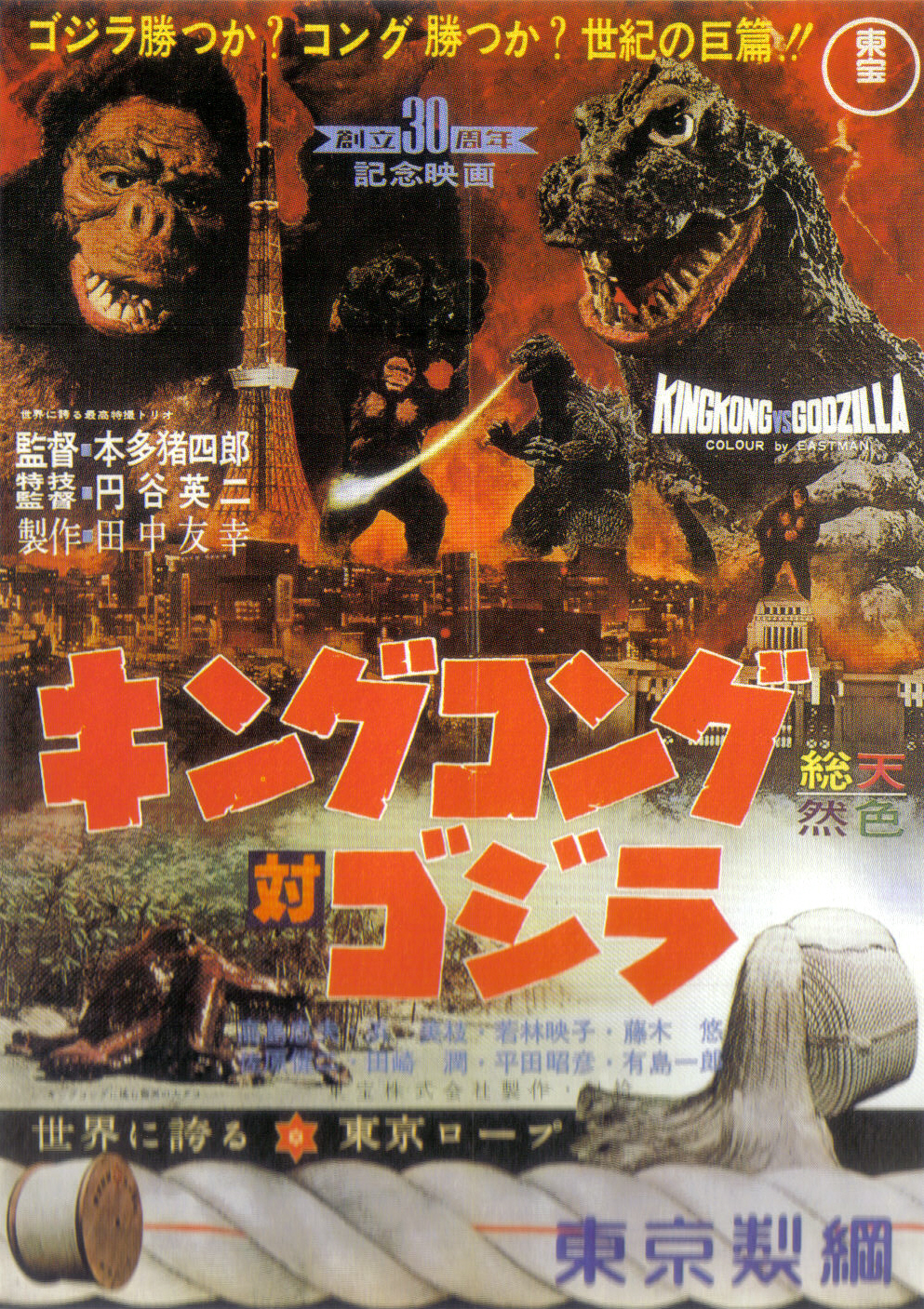
GODZILLA-THON #3 - King Kong vs. Godzilla (1962)
When we last saw our favorite grey-skinned (he's not green, people!) monster, he was en route to becoming a Godzilla popsicle after a lengthy, drawn-out mountainous bombing covered him in ice, which is where he remained for 7 years until Toho decided to revive him for a match against the ultra popular American monster, King Kong. Oddly enough, the Big G wasn't Kong's originally intended adversary. It was going to be... Frankenstein's monster? Yep. The film started out as an idea by stop-motion pioneer Willis O'Brien - the man responsible for bringing Kong to life in his 1933 debut - who wanted to pit Kong against a giant-sized Frankenstein's monster. RKO, the company that owned the character, was all for it... except for the fact that they were no longer a production company. So, one of O'Brien's business buddies decided to do him a solid and shop it overseas, eventually earning the interest of Toho who saw it as a potential vehicle for Godzilla. Unfortunately for O'Brien, his "buddy" cut him out of the deal and took the project to Japan on his own. Although he gets no credit, the only reason this film exists is because of his original concept.

This was one of my favorite movies as a kid, no question. Pitting my two most favorite monsters against each other was genius to my 6-year-old brain. Who cares if the scale on Kong is ridiculously off. He's what, 25, maybe 30 feet tall max? And here he's sprouted to over 100 feet because... he eats red berries on Farrow Island? Yep. There are red berries - which look an awful lot like lychee fruit dyed red - on a remote island in the South Pacific. Kong eats these berries, the juice has made him huge. There is also a large octopus on the island, almost as big as Kong, and it too enjoys drinking the juice from these berries. There are natives on this island as well. They eat these berries. They are normal-sized humans. The things you don't think about when you're young, right? I guess the berry juice magic only works on animals.
With few exceptions, Godzilla films have never been known for their intricate plotting or strong scripts. This isn't an exception to that rule, but the conceit behind getting these two together works pretty damn well. Godzilla, fresh from his cryo-slumber in an ice casket, is awake and rightfully pissed off. And what does G do when he's mad? Yep, time to smash the crap out of Japan. Japan, understandably, does not want this. They figure the best way to combat a big beast is with an equally large beast, so they ship Kong's furry ass over to Japan in order to have him fight Godzilla. The method by which they get the two together is wholly improbable - giant balloons would not lift a 3000-ton ape. Laughable as it is, he sure knows how to make an entrance.
That's the thing here, too - this is the first Godzilla film aimed towards a broader audience. Special effects supervisor Eiji Tsuburaya wanted to make both monsters more family friendly. Don't forget, Godzilla - and to a lesser degree, Kong - was still considered a villain in 1962. By making both monsters slightly more anthropomorphic they seemed less scary to small children. That's why they do things like playing hot potato with a massive boulder. The Godzilla suit was once again redesigned, this time with no ears, three toes on each foot instead of four, and his dorsal fins were enlarged. Many fans consider this to be one of the best suits the series has seen, a distinction I tend to agree with. He looks like more like a dinosaur, and I was a dino-obsessed kid. The Kong suit is, uh... well, frankly, it looks like shit. Half the time. The suit used for longer shots has a more furrowed brow and recessed eyes, giving it a more "hardened" look. The close-up suit just flat out blows. His teeth look like they're all about to exit his mouth in different directions, the eyes are bugged out making him look like a pug/ape hybrid; it's just a terrible design through and through, which is surprising given that Tsuburaya was such a major fan of Kong's 1933 debut. I'll admit that there is a little bit of charm to the guy ape's mug, however, he is unquestionably the ugliest Kong ever committed to film. Yes, even uglier than female Kong and her big third-world ape titties in King Kong Lives.


Despite the constantly-told apocryphal tale, there are NOT two endings for the film. A popular rumor started by Spacemen magazine in the '60s claimed that if you saw the film in Japan, Godzilla would win; but viewing it in American would yield a victory for Kong. Not so. In both versions Kong is the winner, although, really, it's pretty ambiguous. It's a satisfying ending for fans of both monsters because neither can claim true victory - they both end the film alive and slightly bruised. King Kong was much more popular internationally than Godzilla at this time, so it was always intended for him to win the bout. This film did get Toho to thinking that pitting there was something to this pitting-Godzilla-against-monsters thing, which ultimately led to the series continuing on as he faced a roster of current and new Toho creations.
This was one of my favorite movies as a kid, no question. Pitting my two most favorite monsters against each other was genius to my 6-year-old brain. Who cares if the scale on Kong is ridiculously off. He's what, 25, maybe 30 feet tall max? And here he's sprouted to over 100 feet because... he eats red berries on Farrow Island? Yep. There are red berries - which look an awful lot like lychee fruit dyed red - on a remote island in the South Pacific. Kong eats these berries, the juice has made him huge. There is also a large octopus on the island, almost as big as Kong, and it too enjoys drinking the juice from these berries. There are natives on this island as well. They eat these berries. They are normal-sized humans. The things you don't think about when you're young, right? I guess the berry juice magic only works on animals.
With few exceptions, Godzilla films have never been known for their intricate plotting or strong scripts. This isn't an exception to that rule, but the conceit behind getting these two together works pretty damn well. Godzilla, fresh from his cryo-slumber in an ice casket, is awake and rightfully pissed off. And what does G do when he's mad? Yep, time to smash the crap out of Japan. Japan, understandably, does not want this. They figure the best way to combat a big beast is with an equally large beast, so they ship Kong's furry ass over to Japan in order to have him fight Godzilla. The method by which they get the two together is wholly improbable - giant balloons would not lift a 3000-ton ape. Laughable as it is, he sure knows how to make an entrance.
That's the thing here, too - this is the first Godzilla film aimed towards a broader audience. Special effects supervisor Eiji Tsuburaya wanted to make both monsters more family friendly. Don't forget, Godzilla - and to a lesser degree, Kong - was still considered a villain in 1962. By making both monsters slightly more anthropomorphic they seemed less scary to small children. That's why they do things like playing hot potato with a massive boulder. The Godzilla suit was once again redesigned, this time with no ears, three toes on each foot instead of four, and his dorsal fins were enlarged. Many fans consider this to be one of the best suits the series has seen, a distinction I tend to agree with. He looks like more like a dinosaur, and I was a dino-obsessed kid. The Kong suit is, uh... well, frankly, it looks like shit. Half the time. The suit used for longer shots has a more furrowed brow and recessed eyes, giving it a more "hardened" look. The close-up suit just flat out blows. His teeth look like they're all about to exit his mouth in different directions, the eyes are bugged out making him look like a pug/ape hybrid; it's just a terrible design through and through, which is surprising given that Tsuburaya was such a major fan of Kong's 1933 debut. I'll admit that there is a little bit of charm to the guy ape's mug, however, he is unquestionably the ugliest Kong ever committed to film. Yes, even uglier than female Kong and her big third-world ape titties in King Kong Lives.

"Break these chains... of love!"
As with almost every Godzilla film up to this point, King Kong vs. Godzilla had an American version that cut out many scenes and changed some of the film sequences around. They inserted the character of Eric Carter (played by a good looking son of a bitch named Michael Keith), a U.N. reporter who would call on his colleagues around the world to get updates on Godzilla and Kong's respective paths of destruction. Having seen both versions of the film, I've gotta say that I love the U.S. version. And, yes, that would still be the case if I could get these damn rose-tinted glasses off. For one thing, the concept of using a world reporter at the U.N. gives the film a more global, epic feel. I also have a hard-on for vintage '60s Americana news reports and space exploration videos. All of the footage shot with Carter feels like you're watching an old forgotten broadcast. Much of Akira Ifukube's score was replaced by stock library cues that had been used in older films, this was in an effort to give the music a more "Westernized" feel.
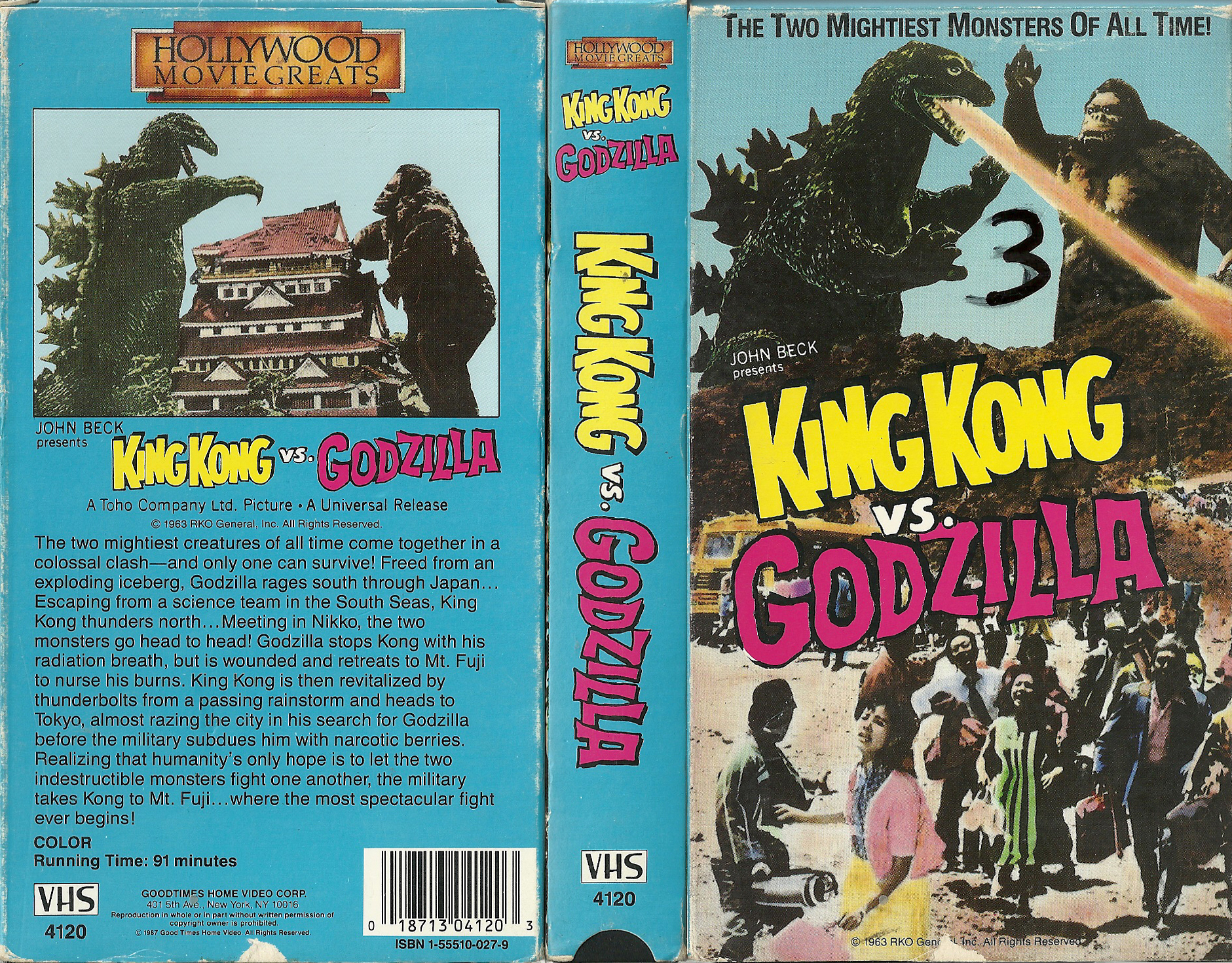
The film does have quite a few distinctions to its name. It was the first time that either Godzilla or King Kong were shot widescreen (the film was done in scope 2.35:1 ratio) and in color. Additionally, the film remains the most-attended Godzilla film of all-time, with over 12 million admissions in Japan. My first experience watching it came from the old Goodtimes VHS, a tape that I still own because I think it's important to retain some Luddite qualities so you can appreciate what once was every now and then.
Subscribe to:
Posts (Atom)