Showing posts with label daikaiju. Show all posts

Saturday, January 11, 2014

GODZILLA-THON #8 - Son Of Godzilla (1967)


Godzilla had been well on his way to becoming a children's icon starting around the release of Invasion of Astro-Monster (1965), with Godzilla vs. The Sea Monster (1966) doing even more to soften the Big G's image so he could appear less threatening. Director Jun Fukuda, who helmed that entry, clearly had no qualms with making the big brute more loveable. Fukuda's next foray into the series would make Godzilla his least intimidating incarnation yet by giving him a son. Minya, or Minilla (a portmanteau or Mini-Godzilla), is easily one of the most divisive kaiju to appear in the films. You either love him or absolutely hate everything about him. In some ways, he is the Jar Jar of this universe - bumbling, well-meaning, always annoying no matter what he's doing, slightly cute, slightly revolting. The series certainly lost an appreciable amount of credibility by so blatantly pandering to kids. But at this point, kaiju films were losing their luster in theaters, so Toho really had no other option but to try marketing to an undiscerning crowd. There needed to be some kind of shake-up to the series, which was part of the reason director Jun Fukuda and composer Masaru Satoh were brought on board. Producer Tomoyuki Tanaka wanted to see how another creative team could handle bringing Godzilla to life. The two films Fukuda made before director Ishiro Honda and composer Akira Ifukube were brought back (for yet another "final" film) are unique in their own right in many ways. Each takes place on an island locale, the human drama is small in scale and surprisingly engaging, and Godzilla takes on a much more protective role. While it's hard to argue the quality didn't dip after Honda's run with the series, fans can readily admit Fukuda's entries are a lot of fun to watch.

A team of scientists on a small island have been working tirelessly to conduct weather experiments designed to help cultivate currently unusable lands so that food can be harvested for the ever-expanding world population. They are alone aside from a handful of massive 7-foot-tall praying mantises. A nosy reporter shows up one day (that's some real dedication, btw) and annoys some of the men, but he's allowed to stay and become the cook after proving himself useful. The group performs an experiment that goes awry, causing a radioactive fallout to cover the island. It also causes the mantises, known as Kamacuras, to grow to an even larger size. The men follow the Kamacuras' to find them digging an egg out of a pile of rubble, eventually cracking it open to reveal a giant turkey, er, Minya, Godzilla's son. The Kamacuras' are just about ready to have a meal of Minya when Big Daddy G shows up and promptly exterminates two of the three bugs. Their other buddy wisely retreats. Now that they can spend some quality time together, Godzilla teaches his son the art of being a monster, including how to blow fire. Except Minya can only blow smoke rings unless under heavy stress, like when daddy accidentally steps on his tail. When Reiko, a native girl, mistakenly wakes up Kumonga, the giant spider, Minya comes to her aid as best he can before getting wrapped up in webbing. And his cries can only mean one thing - Big G is gonna have to step in and save the day. Which he does because that's what he always does. Meanwhile, the scientists figure out a way to make their experiment go off without a hitch just as they escape the island, covering it in a thick layer of snow that blankets a now-hibernating Godzilla and son.

Part of what makes this entry an easy watch is the return of some of the series' familiar faces. Akihiko Hirata returns, this time in the role of a benevolent scientist; and Akira Kubo, one of our lead astronauts from Invasion of Astro-Monster is back, this time as the unflappable reporter whose curiosity vexes some of the men. Even as a kid, I remember the films having a comfortable feeling because I kept seeing the same faces pop up in all the Showa entries. Hirata's presence always lends an air of gravitas to these productions, whereas Kubo brings with him a sense of wonder and confidence.

I really dug the island setting Fukuda employed for this film and its predecessor. Godzilla has stomped the hell out of Tokyo and every other coastal city by now, so why not see how he fares on one of the many islands out in the Pacific? The change of scenery gives the Big G some new grounds to literally stomp upon, as well as explaining how he comes across many of his opponents - they live there. But it isn't just the island alone that makes these installments fun; it's also Masaru Satoh's jazzy, atypical scores. His work on Son of Godzilla is very similar to his last effort, losing the pomp & circumstance of Ifukube's deadly serious scores in favor of what feels like a fun tropical romp with our favorite giant lizard.

Minya. Minilla. Godzilla's seed. When I was a kid, I assumed there was some Mama Godzilla out there somewhere, and that maybe she'd show up at the end of the film or something. When that didn't happen after a few viewings (kids sometimes think movies might end differently upon subsequent viewings; I know I did) I just figured Godzilla must be some asexual reptile that made his own egg. Maybe it got lonely being out there, with nothing to do but smash Tokyo and eat villagers. Regardless of his reasoning, he made a son. Minya looks like a buttered turkey when he hatches, so it's no wonder Kamacuras wanted to have a bite. Luckily, he's able to grow very quickly... and then just stop. Honestly, he grows to around 1/3 of Godzilla's size in no time, but when we see him again 32 years later in Destroy All Monsters he's still the same little shit. He can't even breathe fire any better. He's not intolerable or anything, but he also ain't exactly cute. Mostly, he just wanders around, gets fascinated by girls, and causes just enough mischief that Godzilla has to be roused from his slumber to whoop some ass. He only appears in 3 out of 28 films in the series, and considering Godzilla's new-found status as friend to children everywhere, it was a smart PR move to have him baby-up.

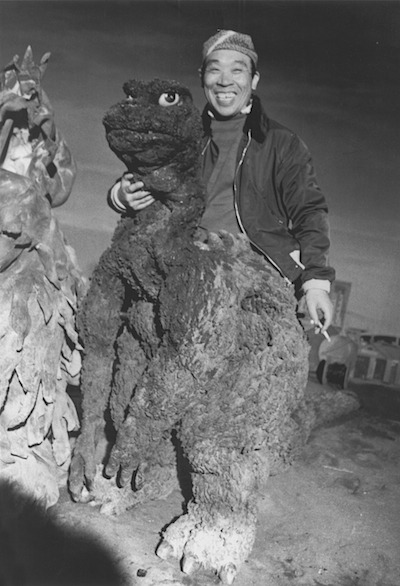
New attitude, new look. Godzilla was bound to get an updated visage once again, especially with this entry's special effects being handled primarily by Sadamasa Arikawa, with pioneer Eiji Tsuburaya only listed as a supervisor. The alterations this time around were much more severe, with Godzilla's head in particular being remolded to look more human and less reptile. His eyes have been enlarged even further, his dorsal fins are rounded and less severe, the tail shortened, and his nose made more snub. Fittingly, he does have a more fatherly appearance than ever before. Kids may have dug the design, but it's a far cry from the apex looks provided in the early '60s. This suit was dubbed MusukoGoji, and it would appear later on in Godzilla vs. Gigan (1972) during the water scenes.

The new monsters this time around have never been fan favorites. Kamacuras, a praying mantis, and Kumonga, the spider. Both monsters would eventually go on to be "featured" in Godzilla: Final Wars as alien-controlled opponents. I use "featured" in quotes because anyone who has seen that film knows each battle lasts about as long as it took to write this sentence. Godzilla has fought insects many times throughout the series, and he's scheduled to do so again with the new film coming this year. Insects are known for their ruthlessness in nature, so they make good opponents for their natural enemy - a lizard. Kamacuras doesn't have much of an attack ability, which explains how Godzilla destroyed two of them in record time. At least Kumonga can shoot webs, similar to Mothra in larva form, but that shit doesn't hold up too well to fire. And Godzilla has plenty of that.

The American version of Son of Godzilla doesn't deviate too much from the Japanese version. The major difference being that the opening pre-credit sequence featuring an airplane almost running into a seafaring Godzilla is cut. A couple of monster's get new names, too -  Kamacuras is referred to as Gimantis, and Kumonga is rechristened Spiga. The American version bypassed theaters, instead premiering on TV in 1969.

Tomoyuki Tanaka must have sensed that Godzilla was getting a bit too soft (plus box office returns were getting low), causing him to bring back the dream team of director Ishiro Honda and composer Akira Ifukube for what was intended to be Godzill'a cinematic farewell, Destory All Monsters (1968). But we all know that just wasn't true...


Monday, January 6, 2014

GODZILLA-THON #5 - Ghidorah, The Three-Headed Monster (1964)


 What's this? Another Godzilla film in 1964? Yep. King Kong can't be the only monster to get two films in one year (King Kong and it's sequel Son of Kong hit in '33... and they were stop-motion!). Toho, seeing flashes of dollar signs after King Kong vs. Godzilla proved to be a huge international success, jumped right into production on another entry in the Godzilla series after he finished battling Mothra just a few months earlier. This entry, Ghidorah, the Three-Headed Monster, would be significant for a number of reasons, featuring many firsts not seen in a Big G picture up until now. Chief among those would be the introduction of Ghidorah (renamed "Ghidrah" for U.S. audiences because...?), the eponymous flying dragon that would go on to become Godzilla's most formidable foe. In fact, Ghidorah proved to be so popular as a villain that he (it?) even appeared in non-Godzilla properties, such as Rebirth of Mothra (1996) and one of its sequels. This was also the first entry to feature Godzilla taking on multiple monsters, as he winds up fighting Rodan, larva Mothra, and King Ghidorah, though eventually everyone just decides to gang up on Ghidorah and beat his ass back into space. The entry was the first time use a central plot focused on aliens infiltrating Earth for nefarious, nebulous purposes. Alien races would go on to be used in numerous sequels in the series, being employed frequently right up through Toho's (currently) final Godzilla film, Godzilla: Final Wars (2004). And, as a minor first that would be capitalized upon later, Godzilla is less the villain and more an anti-hero who begrudgingly helps the Earth by teaming up to defeat Ghidorah. From here on out, virtually every film in the series would have Godzilla in this role, with only a few exceptions. These firsts weren't just important because they introduced characters and themes that would recur throughout the series' history; they also were the reason why many fans consider this film one of the best Toho produced during the Showa period.

Although the canon of the series got progressively more muddled as time went on, the early entries maintained a timeline that tended to follow each sequel respectfully. At the end of the last picture, Godzilla, having just been the target of a Mothra larva bukkake fest, was vanquished to the sea. Here, that exactly where he rises from before scuttling with Rodan and destroying an ocean liner. The human element to the plot focuses on a Martian (or Venusian, depending on which cut you're watching) princess who is the target of an assassination plot by men wearing garish mid-century outfits. The princess publicly makes bold predictions, correcting prophesying that Rodan would rise from a crater neat Mt. Aso, and Godzilla would rise from the sea. Oh, and there's also a last-minute mention of a cosmic creature named King Ghidorah that decimated her people on Mars and now he's landed on Earth in the form of a meteoric egg getting ready to hatch, oh, right about now.

The story for most Godzilla sequels is practically latent, since the real reason everyone watches these is for the monster porn. There have been at least a dozen highly memorable allies and villains across G's long career, and this film puts together some of the top talent by including fan favorites Rodan (whose name is actually Radon, a contraction of pteranodon) and Mothra - both of which had solo outings years prior - along with King Ghidorah, a then-new kaiju that quickly rose up the ranks to be the fans' favorite adversary for all benevolent monsters. As usual, the action is sporadic until the film has around 15 minutes left, at which point it becomes a full-on kaiju slugfest with Godzilla, Rodan, and Mothra (in larva stage) teamed up to pummel Ghidorah. Shockingly, the only time Godzilla ever uses his atomic breath is during a skirmish with Rodan, never on Ghidorah. Instead, he just chucks a lot of rocks at him. Come to think of it, he does that to Rodan, too. And he did it to Mothra in the last film. The guy has atomic breath that can fuck everything in its path up... and he throws rocks. Still, there's really nothing more enjoyable (to me) than watching all these glorious Golden Age characters, brought to life by men in suits, duking it out.

As usual, changes were made to the existing Godzilla suit, dubbed Mosugoji by fans, though this time around they were relatively minor, leading to this new suit to be dubbed Mosugoji II. The head piece had become damaged during the last film, meaning effects supervisor Eiji Tsuburaya had to reinforce the mouth and rebuild the sculpt a bit. The result is on-par with Mothra vs. Godzilla in terms of quality, delivering one of the best looks G has ever enjoyed. As a point of trivia, there is one scene where the old suit is used: just as Godzilla makes his entrance from the depths of the ocean. Toho preferred to use older suits for any water or effects shots, when possible, so the old suit makes a quick (and literal) pop-up before being retired for the new one.

The version of this film I grew up watching as a kid was, unsurprisingly, the American edit. If you bought it on VHS back in the '80s, that was all you had available to watch. And do you think a 6-year-old kid knew, or cared, either way? Exactly. Plus, despite the fact that AIP butchered Akira Ifukube's score, removing nearly all of it from their version of the picture, they did a fair amount of judicious editing by removing some of the subplot material. Subplot meaning anything not featuring Godzilla. The resulting version runs around eight minutes shorter than Toho's cut, which, really, is the best version to watch. Also, I can't confirm it now but it sounds like they used a newer dub for the English cut, and not an old AIP dub track that at least holds some kitsch factor. New dubs sound like shit on these old films. Classic Media's DVD contains both versions of the film, and unsurprisingly the Japanese edit not only looks and sounds better, but you're getting the full picture to boot.

Ghidorah, the Three-Headed Monster went on to become one of the most lauded entries in the series, even garnering a few accolades from American critics, who are never an easy sell with these movies. Godzilla had begun his turn to defender of the Earth and... :shudder:... friend to children everywhere. Eiji Tsuburaya said he enjoyed making these pictures so kids could enjoy them, a philosophy producer Tomoyuki Tanaka also favored, so it was bound to happen eventually. Not that he ever got too cuddly or anything, Godzilla's Revenge aside. But before the series was to move on to other foes for the Big G to conquer, there was still one more bout with Ghidorah on the table...

Wednesday, July 31, 2013

GODZILLA-THON #4 - Mothra vs. Godzilla (1964)

No, unfortunately this film does not pit Godzilla against the malevolent shape-shifting alien beast that headlined John Carpenter's 1982 film. Rather, this was the first example of Toho digging through their monster roster and picking a worth opponent for Big G to rumble with in Japan. After the incredible success of pitting him against King Kong, Toho quickly went to work on penning a sequel. Intended to be given the lazy title of Continuation: King Kong vs. Godzilla, the project never made it past the early planning stages. Oddly enough, a super-sized version of Frankenstein's monster was once again submitted as a possible foe for Godzilla until Toho rejected that script (a script I'd love to read) and decided on Mothra, who had just headlined her own eponymous film in 1961. This is often considered to be one of the best films in the series period, as well as featuring one of the best Godzilla suits. I agree on both counts.

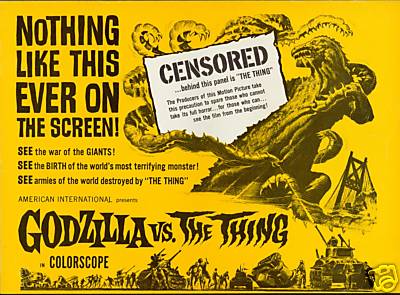
It's true, there is "nothing like [that] ever on the screen" because nothing in the movie has tentacles.

So, what's up with the vague, ambiguous title of Godzilla vs. The Thing? That title was only used for the American theatrical release, though, as all of the home video versions I can recall went by Godzilla vs. Mothra. To make it even more (slightly) confusing, the Japanese title is Mothra vs. Godzilla. I'm not exactly sure why Toho started putting their leading monster in the secondary title position. Godzilla doesn't even enjoy top billing until 1966's bout with Ebirah. I'm not complaining about this; it just seems a bit odd. But it could also be that the Japanese aren't as particular about this kind of thing like American film marketing. I've watched the Japanese version on Classic Media's outstanding DVD before, but having grown up on the English-dubbed version it's nearly impossible not to long for that version and that one only. The funny thing (no pun intended, really) is that I'd only ever seen it as Godzilla vs. Mothra, but this AIP print comes with the vs. The Thing title.


Amazingly, the American version hardly messes with the Japanese cut much. Usually, the American distributors will consider entire re-shoots around SPFX footage, or at the very least they'll trim the film down to the bare essentials to maximize monster time. Here, they not only leave the film almost totally intact, but they actually added a new scene of Godzilla being showered with missiles. The Frontier Missile sequence, featuring the American military taking control of the war against Godzilla, is full of great man-in-suit footage. Just as it sounds, it basically Godzilla stomping around while the military tries in vain to take him out. Of course, we know he ends up demolishing everything in his way because that's kinda his thing, but the fact that the U.S. got additional footage that the Japanese market didn't is pretty huge. This version was also released a scant 4 months after its Japanese debut, whereas all previous films had taken at least a year (or more) to be readied for stateside consumption.

The film's plotting doesn't deviate too far from the now-standard Godzilla formula. As per usual, G wakes up from hibernation - here he's buried underground and appears from beneath a quaking plot of land - and he just starts stomping Japan into the ground. Unlike in previous films, here he doesn't have any commute since his sleeping quarters were conveniently located in a coastal city. Just before Godzilla wakes, though, a giant egg had washed up on the beach. A massive egg capable of providing omelets for half the population. But this egg contains some special larva, the offspring of Mothra. You  know Mothra - giant moth, worshiped by native islanders and adored by two diminutive princesses who have a penchant for singing her praises constantly. My dad heard that song so many times when I was a kid that he can still sing it (albeit mockingly) to this day. Some businessmen try to buy the egg and set up an amusement park around it, completely ignoring the fact that it's an egg, which means it will either hatch something or rot away in the sun. Either way, not exactly a sound business model for generating revenue. It also doesn't help that one of the main dudes in charge looks like Hitler's long-lost Japanese brother.


With Godzilla on the move, and the fate of Mothra's egg in question, our fearless heroes/heroine - this time around it's a couple of journalists - call upon the tiny twins, known as Shobijin, to get Mothra to the mainland. Only problem is, Mothra has seen better days. She's an active senior looking forward to a few golden years before packing up her cocoon and jettisoning off the Moth Heaven. It's not meant to be, however, and soon Mothra is headed to Japan for a one-on-one showdown with Godzilla. And the Big G, being rightly pissed off for no apparent reason, promptly smacks her ass down. Oh noes! There goes any hope for saving Japan... unless a lot of tribal song and dance can get Mothra's egg to hatch! Of course, it does and out pop twins. I always liked Mothra's larva when I was younger. They seemed like such unlikely adversaries for Godzilla, but managed to hold their own impressively well considering they were literally just born and have virtually no defenses outside of tail biting and shooting silly string-like webbing from their mouths. 

A monster's humiliation, immortalized in plastic for all to see.

One area in which the film gets consistent props is for the suit design. This one, intended to be different from the Kingoji suit used against King Kong, was dubbed (appropriately enough) the Mosugoji. Godzilla's was given a less reptilian appearance, in addition to enjoying less bulk (battling a big ape must be a killer workout), a smaller snout, and an overall visage that is more menacing and "evil" versus the "big dinosaur" look he got last time around. Out of all the suits Godzilla films employed during the Showa era, I would have to agree that this one is among the best. Slight modifications were made for the next two subsequent films, after which Godzilla got some revamps that - quite honestly - made him look like a giant Sesame Street character. 
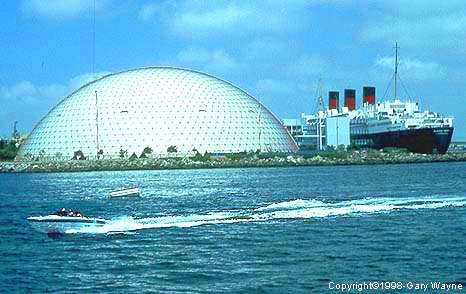
To end on a somewhat amusing anecdote, growing up in Southern California my father always used to point out the massive hangar which houses the Spruce Goose because it resembles Mothra's egg from far away. We lived about 50-ish miles from Long Beach, and on a clear day it looked just like that giant egg was sitting by the shore, waiting to hatch. All these years later I still think that every time I see it while driving. 


Friday, July 26, 2013

GODZILLA-THON #3 - King Kong vs. Godzilla (1962)

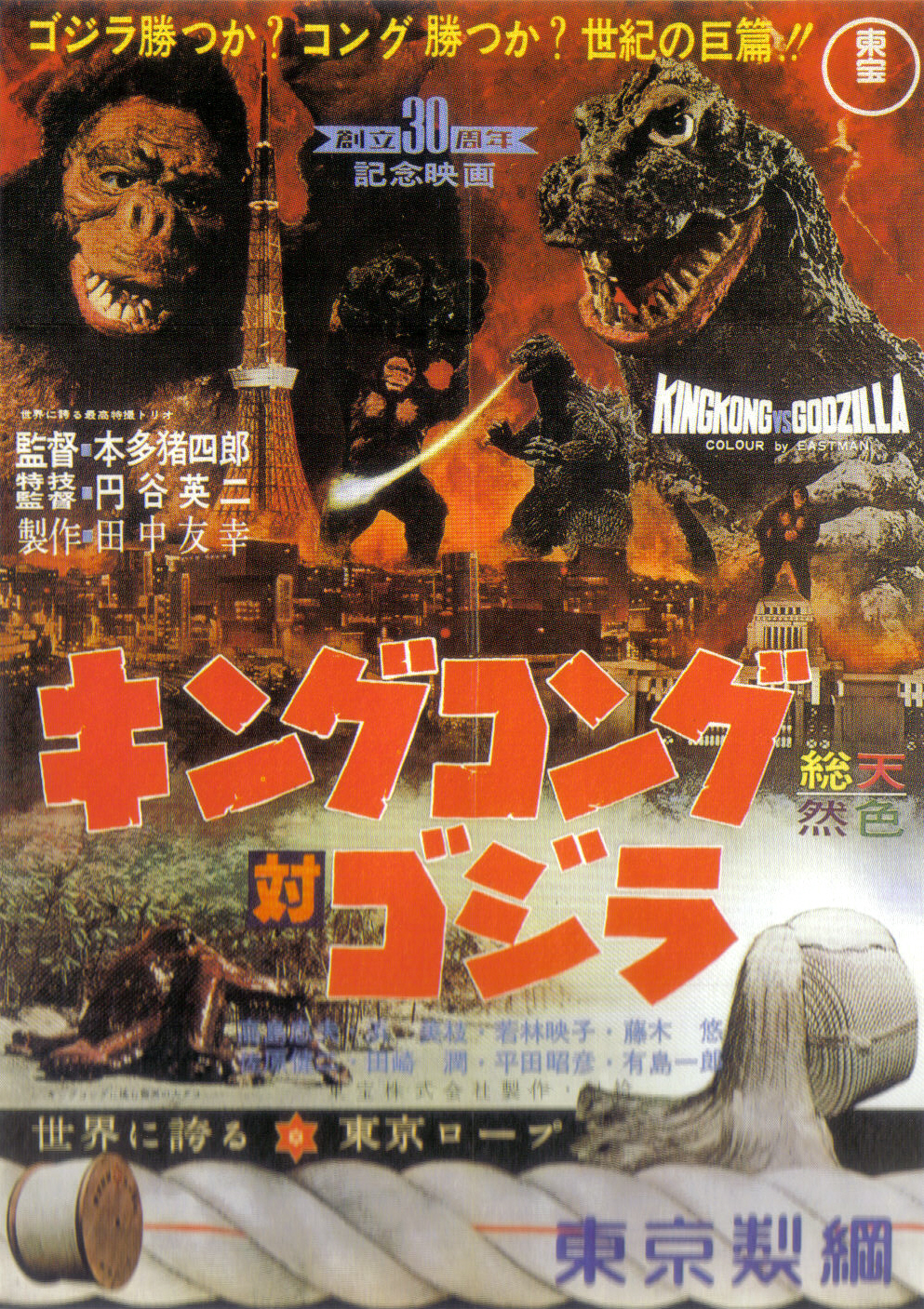
When we last saw our favorite grey-skinned (he's not green, people!) monster, he was en route to becoming a Godzilla popsicle after a lengthy, drawn-out mountainous bombing covered him in ice, which is where he remained for 7 years until Toho decided to revive him for a match against the ultra popular American monster, King Kong. Oddly enough, the Big G wasn't Kong's originally intended adversary. It was going to be... Frankenstein's monster? Yep. The film started out as an idea by stop-motion pioneer Willis O'Brien - the man responsible for bringing Kong to life in his 1933 debut - who wanted to pit Kong against a giant-sized Frankenstein's monster. RKO, the company that owned the character, was all for it... except for the fact that they were no longer a production company. So, one of O'Brien's business buddies decided to do him a solid and shop it overseas, eventually earning the interest of Toho who saw it as a potential vehicle for Godzilla. Unfortunately for O'Brien, his "buddy" cut him out of the deal and took the project to Japan on his own. Although he gets no credit, the only reason this film exists is because of his original concept.


This was one of my favorite movies as a kid, no question. Pitting my two most favorite monsters against each other was genius to my 6-year-old brain. Who cares if the scale on Kong is ridiculously off. He's what, 25, maybe 30 feet tall max? And here he's sprouted to over 100 feet because... he eats red berries on Farrow Island? Yep. There are red berries - which look an awful lot like lychee fruit dyed red - on a remote island in the South Pacific. Kong eats these berries, the juice has made him huge. There is also a large octopus on the island, almost as big as Kong, and it too enjoys drinking the juice from these berries. There are natives on this island as well. They eat these berries. They are normal-sized humans. The things you don't think about when you're young, right? I guess the berry juice magic only works on animals.

With few exceptions, Godzilla films have never been known for their intricate plotting or strong scripts. This isn't an exception to that rule, but the conceit behind getting these two together works pretty damn well. Godzilla, fresh from his cryo-slumber in an ice casket, is awake and rightfully pissed off. And what does G do when he's mad? Yep, time to smash the crap out of Japan. Japan, understandably, does not want this. They figure the best way to combat a big beast is with an equally large beast, so they ship Kong's furry ass over to Japan in order to have him fight Godzilla. The method by which they get the two together is wholly improbable - giant balloons would not lift a 3000-ton ape. Laughable as it is, he sure knows how to make an entrance.

That's the thing here, too - this is the first Godzilla film aimed towards a broader audience. Special effects supervisor Eiji Tsuburaya wanted to make both monsters more family friendly. Don't forget, Godzilla - and to a lesser degree, Kong - was still considered a villain in 1962. By making both monsters slightly more anthropomorphic they seemed less scary to small children. That's why they do things like playing hot potato with a massive boulder. The Godzilla suit was once again redesigned, this time with no ears, three toes on each foot instead of four, and his dorsal fins were enlarged. Many fans consider this to be one of the best suits the series has seen, a distinction I tend to agree with. He looks like more like a dinosaur, and I was a dino-obsessed kid. The Kong suit is, uh... well, frankly, it looks like shit. Half the time. The suit used for longer shots has a more furrowed brow and recessed eyes, giving it a more "hardened" look. The close-up suit just flat out blows. His teeth look like they're all about to exit his mouth in different directions, the eyes are bugged out making him look like a pug/ape hybrid; it's just a terrible design through and through, which is surprising given that Tsuburaya was such a major fan of Kong's 1933 debut. I'll admit that there is a little bit of charm to the guy ape's mug, however, he is unquestionably the ugliest Kong ever committed to film. Yes, even uglier than female Kong and her big third-world ape titties in King Kong Lives.

"Break these chains... of love!"
As with almost every Godzilla film up to this point, King Kong vs. Godzilla had an American version that cut out many scenes and changed some of the film sequences around. They inserted the character of Eric Carter (played by a good looking son of a bitch named Michael Keith), a U.N. reporter who would call on his colleagues around the world to get updates on Godzilla and Kong's respective paths of destruction. Having seen both versions of the film, I've gotta say that I love the U.S. version. And, yes, that would still be the case if I could get these damn rose-tinted glasses off. For one thing, the concept of using a world reporter at the U.N. gives the film a more global, epic feel. I also have a hard-on for vintage '60s Americana news reports and space exploration videos. All of the footage shot with Carter feels like you're watching an old forgotten broadcast. Much of Akira Ifukube's score was replaced by stock library cues that had been used in older films, this was in an effort to give the music a more "Westernized" feel.
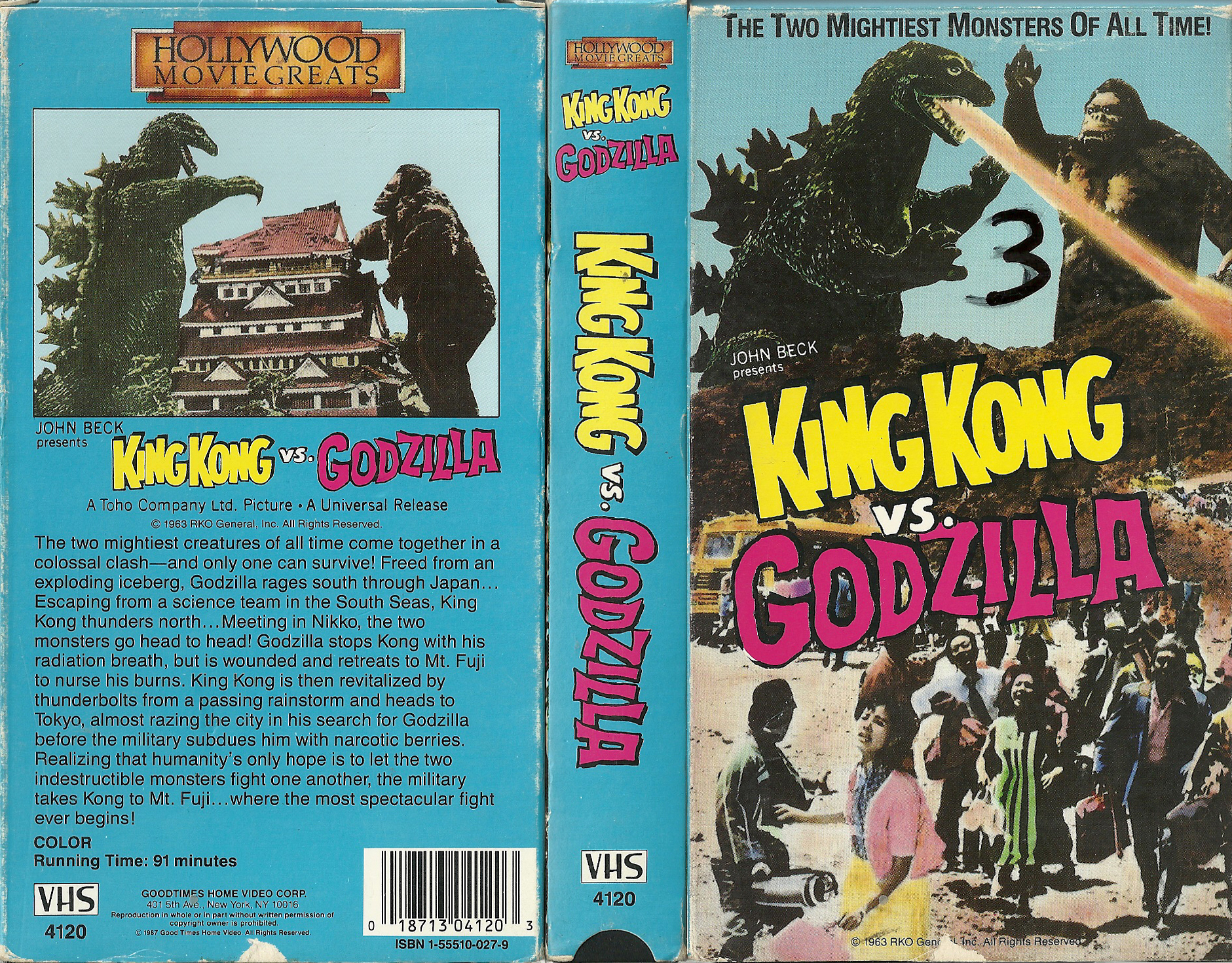
The film does have quite a few distinctions to its name. It was the first time that either Godzilla or King Kong were shot widescreen (the film was done in scope 2.35:1 ratio) and in color. Additionally, the film remains the most-attended Godzilla film of all-time, with over 12 million admissions in Japan. My first experience watching it came from the old Goodtimes VHS, a tape that I still own because I think it's important to retain some Luddite qualities so you can appreciate what once was every now and then. 


Despite the constantly-told apocryphal tale, there are NOT two endings for the film. A popular rumor started by Spacemen magazine in the '60s claimed that if you saw the film in Japan, Godzilla would win; but viewing it in American would yield a victory for Kong. Not so. In both versions Kong is the winner, although, really, it's pretty ambiguous. It's a satisfying ending for fans of both monsters because neither can claim true victory - they both end the film alive and slightly bruised. King Kong was much more popular internationally than Godzilla at this time, so it was always intended for him to win the bout. This film did get Toho to thinking that pitting there was something to this pitting-Godzilla-against-monsters thing, which ultimately led to the series continuing on as he faced a roster of current and new Toho creations.


Saturday, July 20, 2013

GODZILLA-THON #1 - Gojira (1954)

Godzilla fever has been running high thanks to Gareth Edwards' upcoming 2014 reboot invading Comic Con this weekend, so it seemed like as good a time as any to re-watch all of Toho's 28 entries in the historic franchise.


For a bit of backstory, I'm essentially the definition of a dyed-in-the-wool Godzilla fan. As far back as I can remember, I've been fascinated with big monster movies, or daikaiju for the initiated. I've got the worn-out VHS tapes to prove it. I would curate my own movie marathons, piling up my store bought (and bootlegged) Big G tapes to ready myself for an entire day of nerding the fuck out. All at the age of 6. Few things made me happier than watching man-in-suit movies until my eyelids gave out and I was carried off to bed. I owned every single film Toho had released up to that point - this would've been around 1987/88 - which explains why my favorite G films come from the earlier Showa era of the series. In fact, aside from Godzilla 1985 I didn't see any Heisei era films until the mid-to-late '90s. This is partly due to Toho doing a shitty job of giving them proper VHS released in America... and partly due to my entering high school and maintaining a social life.

But I digress. The point I'm getting at here is that despite all of my constant Godzilla-thons, I never watched the original film much. I watched it plenty to know it well enough. The black & white presentation never bothered me as a kid. I gravitated towards the more monster-heavy entries in the series, like 1974's Godzilla vs. Mechagodzilla. Plus, let's face it - Toho might've done a commendable job on the suit itself but that puppet used for close-up shots hardly looked menacing. And this was also the American-edited 1956 version, called Godzilla, King of the Monsters, which eschewed virtually all of the somber mood and nuclear subtext of the Japanese version in order to give Perry Mason, er, Raymond Burr screen time as our man on the ground, journalist Steve Martin. Clearly, this was before the time of the Steve Martin, but the name confusion did turn up when the character was reprised for Godzilla 1985. There, they just called him "Steve" or "Mr. Martin", never a combination of the two. It isn't a bad film - especially to the non-critical mind of a kid - but since the original version was lovingly restored around 2004 people seem to deride it more than usual.

Back to the marathon. Criterion put out a sexy new edition of Gojira (1954) on Blu-ray. This edition fully blows the Classic Media Blu-ray release out of the water, with an improved picture (CM's release was 1080i), better audio, and a minor wealth of bonus material. Now, it should be noted that they didn't license any of the features found on the 2-disc DVD Classic Media released, so fans who own that edition would be wise to hang on to it. But if all you're concerned with is the a/v presentation, look no further than Criterion.


The film itself is clearly superior to the heavily-edited American version. As I stated earlier, the tone is much more serious and somber. Godzilla is an obvious allegory for the undersea nuclear testing being done around that time (and even more obviously, the bombing of Hiroshima and Nagasaki). He is presented as a force of nature, an unstoppable beast who only leaves the sea when his food source has been depleted due to deep-sea explosions. As gripping as the monster footage is, the story is compelling and humanistic. Professor Yamane (Takashi Shimura) desperately wants to study the beast, hoping that through science we can learn how Godzilla is impervious to atomic testing and conventional weaponry. But the military just wants to kill it, a task they continually fail at completing. They have to enlist the aid of Dr. Serizawa (Akihiko Hirata), a scientist who has developed a device - the Oxygen Destroyer - that can essentially liquefy oxygen, killing whatever is in its wake. He's reluctant to offer his aid, however, since he knows that as soon as his experiment is revealed men will want to harbor it for nefarious purposes. The pathos bleeds off the screen, elevating what could have easily been a simple monster-runs-amok film into something emotional and poignant.

"Chicks dig the patch, right?"

Much - if not all - of the film's success is thanks to the triumvirate of technical innovation: director Inoshiro Honda, producer Tomoyuki Tanaka, and special effects supervisor Eiji Tsuburaya. Without delving too deeply into history that can be found elsewhere, it was Tanaka's idea to film the movie. The script went through many changes, as did the final design for Godzilla, which at one point was to be a monster with a mushroom cloud-shaped head (!). Finally, on their third attempt to create a useable sculpture, did Tsuburaya & Tanaka settle on the now-classic look. They still needed to put a man in that 200-lb. rubber suit, though. Enter Haruo Nakajima, who wore the bulky behemoth under stage lights with temperatures inside reaching 130 degrees Fahrenheit. He reportedly had a cup of sweat drained from the suit daily. The stiff rubber forced a more reptilian - and, thus, less human - style of movement because Nakajima was so restricted. Rumor has it the suit could stand on its own once he was out! Sounds like grueling work, but he took it all in stride without complaining. Nakajima did almost all of the suit work during the Showa era.

"Godzilla - did the Oxygen Destroyer really kill him... or was it cancer?"

It's been said that a good score can dramatically help any movie, and the impressive orchestration of Akira Ifukube certainly does just that. This is the man who composed a large majority of Godzilla's most memorable themes. This score reciprocates the somber tone meant for the film, making it unique among his work on other Godzilla films since the mood never reached the emotional depths of this first picture. Ifukube would go on to score for Godzilla the rest of his career, finally stepping down after handling duties on Godzilla vs. Destroyer in 1995. Let's not forget he also gave the Big G his trademark roar, something achieved by rubbing a resin-coated glove over a contrabass string. Simple, effective, incredibly memorable.  

I liken this inaugural Godzilla film to Rocky (1976) - hang on a sec, lemme finish - in that this was the launch pad used to gauge reaction and then plot ahead. Everyone seems to forget that Rocky loses in the first film, much like the Big G loses (even worse, really... he dies) here. But as Prof. Yamane said in the film, perhaps there are more of Godzilla's species out there, waiting to be woken up from continued testing.

Lucky for us, he was right.