Despite the subjectivity of nearly every horror film in existence, there are a handful of titles that more or less remain above reproach because they’re just so damn beloved. These are the films that would make you question a person’s love of the genre if they claimed not to be a fan. When it comes to a title like Pumpkinhead (1988), horror fans should fall into one of two categories:
1. Those who love it.
2. Those who haven’t yet seen it.
After toiling away in Hollywood since the early ‘70s, special FX pioneer Stan Winston finally got the chance to direct his first feature length film (and it should have stayed his first and only, if you’ve seen his one other theatrical picture, 1990’s A Gnome Named Gnorm). Pulling from a concept screenwriter Gary Gerani had kicking around in his head since the late ‘70s, along with a poem written by Ed Justin, Pumpkinhead is a seminal supernatural creature feature; a morality tale pitting film’s two oldest foes against one another – good vs. evil. Swathed in atmosphere and anchored by a strong lead in Lance Henriksen, the true star here is the eponymous demon of vengeance, Pumpkinhead, who remains one of cinema’s most realized, emotive creations of latex and mechanics ever produced. Even heathens who only find the film to be decent can’t argue the beast Winston’s team conjured up isn’t an enduring icon of horror; its legacy only diluted by some truly atrocious sequels (although, being a child of ‘90s horror, I have to admit to fostering a soft spot for Pumpkinhead II: Blood Wings (1994) despite the fact it is entirely unnecessary).
Ed Harley (Lance Henriksen) is a simple man. He lives in a modest cabin with his young son, Billy (Matthew Hurley), and their dog, Gypsy (who also played the Peltzer family pet in 1984’s Gremlins), since his wife passed away many years ago. By day, Ed and Billy run a local market & feed store by the roadside. One day, some city folk stop by on their way to a weekend getaway in the woods. Ed is forced to leave the shop when he forgets some feed for Mr. Wallace (played by John Carpenter crony George “Buck” Flower), leaving Billy “in charge” momentarily. And in that moment, Billy is run down and killed by Joel (John D’Aquino), a hothead dickhead who drinks constantly, thus ensuring that even when he does have a legitimate accident (see: Billy) he still has to go on the lam. Steve (Joel Hoffman), Joel’s brother, does the right thing by staying behind and trying to speak with Ed when he returns. As you might imagine, Ed is not thrilled.
Ed drives back down to the Wallace’s place, hoping to get in touch with an old woman who lives in these parts. She’s rumored to be able to conjure up something to even the score; a demon that Ed witnessed killing a man (Dick Warlock, in a very brief role) back when he was a young boy. One of Wallace’s kids shows him the way, down into the swamp where Haggis (Florence Schauffler) lives in a ramshackle cabin. Ed wants vengeance, which Haggis can provide… at a high price. Ed is instructed to dig up a malformed corpse from atop a small plateau within a pumpkin patch. He returns with the body, Haggis performs a ritual and the corpse transforms into the gargantuan demon of vengeance, Pumpkinhead. Numerous deaths follow.
It’s a tale as old as time – good vs. evil, revenge, justice, consequences. Pumpkinhead doesn’t succeed by doing things differently; it succeeds by getting a number of variables right, including the casting of Henriksen, who brings a strong sense of gravitas to the picture; delivering an atmospheric, almost gothic aesthetic set deep in the woods of Califo…er, the South; and, most importantly, Pumpkinhead as a character is unforgettable. Winston was mostly hands off during production because he had so much to manage running the ship. Thankfully, his shop contained a number of insanely talented individuals – Tom Woodruff Jr., Alec Gillis, Shannon Shea – that they were able to craft such amazing work in the span of several weeks. As a malevolent creature from another world, Pumpkinhead feels organic; it moves and emotes with as much realism as possible. Verisimilitude aside, the design is just flat-out spectacular, too. You almost can’t blame these producers for making sequels because it’s the kind of movie monster you want to see more of. Note I did say “almost”.
Henriksen is such a damn solid actor. He’s got this soulful charm to him, whether he’s playing a villain or a hero. It’s a magnetic presence. Side note: the guy is just like that in real life, too. Total class act. Here, as Ed Harley, he’s a man who makes a rash decision based upon raw emotion and a sense of total loss; he needs these kids to feel as he does, in this moment. Only after Ed is vicariously linked to Pumpkinhead does he understand the error of his choice, a wrong he desperately tries to right until the very end. It’s hard to imagine anyone doing a better job filling Harley’s boots.
The film’s road to theaters was not an easy one, fraught with studio change-ups, a poorly-timed wide release date and very few screens. Still, it thrived upon hitting home video, where mass audiences were finally able to appreciate the hard work Winston and co. had done. It’s possible for some this is one of those “rose-tinted memory” films that might not hold up for first-time viewers more accustomed to CGI creatures and hot-bodied teens in their horror. I stress “possible” because, really, you can’t love horror and not love everything about Pumpkinhead. It’s a brisk romp through the swamp, full of creepy creature moments and gorgeously lit, looking like a southern-fried Mario Bava flic.
Fans of Pumpkinhead have likely purchased this film at least a handful of times – VHS (which had the best cover art of any release), a full-frame DVD, a special edition widescreen DVD and now, finally, the reigning kings of horror on Blu-ray, Scream Factory, have delivered what should be taken as the definitive version, with a 1.85:1 1080p image that looks just great. Barring an extensive 4K restoration, this is the best the film will ever look on home video. There’s not much to complain about here. The picture relies heavily on colored lighting and a brooding atmosphere to heighten the horror, with many shots bathed in hues of red or blue. That blue, in particular, looks very effective when coupled with all the smoke pumped into the shots when our characters are trying to escape from the woods. Black levels are stable and rich; and they need to be because nearly the entirety of the film takes place in dimly-lit woods. Contrast takes a bit of a hit at night, when details tend to get obscured by shadow, though much of that lost detail is just inherent to such low lighting. Unsurprisingly, the image looks best during the daylight scenes, when finer details are able to more fully show themselves. No digital tweaking has been done here; no DNR or unnecessary tampering. Other than a few minor specks, the print used here is in great condition. Some minor compression issues pop up in the background of a few scenes; nothing major, though. I’ve seen this movie a hundred times on a half dozen formats on this is unquestionably the best it has ever looked.
As usual, fans have the choice of an English DTS-HD MA in either 5.1 surround sound track or 2.0 stereo. Now, the film was originally mixed in Ultra Stereo and the additional tracks added for a more immersive experience aren’t completely needed. The multi-channel option does sound a bit fuller than the stereo track, so this will simply come down to a matter of preference for most. Personally, unless a 5.1 channel track is terribly done it’s usually my go-to pick simply because the soundfield is expanded more fully. If you’re a purist, however, just know the 2.0 stereo track gets the job done nearly as well. Dialogue tends to sound a bit thin and flat on either track, lacking presence. Rears get some sporadic play during tense moments, never quite delivering enough audible cues to be totally immersive. The highlight here is composer Richard Stone’s score (someone get on a vinyl release, ASAP), which is perfectly constructed for the film. Stone uses a great deal of Southern instrumentation here, including some great pieces done with slide guitar and harmonica. There’s nothing generic about this score. Subtitles are included in English.
Continuing on with their mission to provide amazing releases, Scream Factory not only included ALL of the bonus materials found on the previous special edition DVD but they’ve also included newly-produced featurettes in an effort to absolutely pack every bit of space on this disc with awesome material. In addition to the returning audio commentary, documentary, trailers and featurettes, the disc also includes new interviews, a retrospective on Winston and an image gallery.
Ported over from the previous DVD is this audio commentary, featuring co-screenwriter Gary Gerani and creature FX creators Tom Woodruff Jr. and Alec Gillis, moderated by filmmaker (and super fan) Scott Spiegel. It’s a mostly-active session, with all participants getting plenty of time to discuss their respective contributions to the film. Everyone does quiet down on a few occasions, leaving awkward gaps of silence, and some info is redundant if you watch the other bonus features first. Still, if you want to know everything you possibly can about the production, this is an essential listen. Pumpkinhead Unearthed is a six-part documentary that runs just over an hour. No stone is left unturned here, as nearly every available principal cast & crew member is interviewed about their work on the film. This documentary was excellent when it arrived with the SE DVD, and here, presented in HD, it’s no less interesting to watch all over again. Behind the Scenes is a vaguely-titled piece that looks at the genesis of Pumpkinhead as a practical creation. Most of this footage consists of the special FX crew guys testing out a rough form of the Pumpkinhead suit, as well as sculpting the “hero” head and seeing the entire thing all put together on set. Night of the Demon with Richard Weinman is an interview with the veteran producer, who has some vivid recollections about working with Winston, including one moment of testosterone overload when he and producer Dino DeLaurentiis got into a screaming match. Dino, of course, won. The Redemption of Joel with John D’Aquino is an interview with the film’s big jerk. Ironically, he originally wanted to play the Jeff East good guy role, but wound up playing the heavy. He makes mention of his death scene being very painful due to the rig in which he was hoisted up. The Boy with the Glasses with Matthew Hurley is an interview with the actor who played Ed Harley’s son. Young Billy is all grown up, looking very much like you’d expect Older Billy to appear. Being so young during the time of filming, he’s got nothing but golden memories of his time on set. He points to Henriksen as making a great effort to keep him comfortable during the shoot. Demonic Toys is an interview with Jean St. Jean, sculptor at SOTA toys, who talks about the process by which he created the 20” tall Pumpkinhead figure that was put out many years back. It looks badass, but I’ll say this: it can’t stand for sh*t. Kids, leave most of your toys in the box. Trust me. Remembering the Monster Kid – A Tribute to Stan Winston is a slightly moving, slightly long remembrance of the FX legend. Stan was a major innovator in the film world; this is undeniable. Some of his contemporaries (mostly those who worked on this film) show up to wax fondly on how much they admired him. A couple tales of his temper are worked in, though nothing all that revelatory or shocking is told. This could’ve had more substance to it, but as an effusive tribute it’s not half bad. A still gallery containing 102 images and the film’s theatrical trailer, looking rather rough, complete the extra material.
The cover art is reversible, allowing for display of either newly-commissioned art (which is some of the best to grace a Scream Factory title) or the original theatrical key art, which, frankly, isn’t all that awesome. Nobody would’ve minded if they chose the VHS art, but this is a very minor quibble. A slipcover featuring the new art is included on first pressings.
I am a lover of cinema, first and foremost; but, my tastes tend to lurk deep in the cluttered, nightmarish celluloid basement where evil dwells. Ghoulish and macabre pictures have always held my interest above all else. I grew up on a steady diet of Godzilla, Friday the 13th and any & every VHS tape to be found under the "Horror" banner at local video stores. Updates may not come frequently, but I'll at least do my best to be sure they're worthwhile.
Showing posts with label monster. Show all posts
Friday, September 12, 2014
Sunday, March 2, 2014
GODZILLA-THON #26 - Godzilla Against Mechagodzilla (2002)
Man, do I hate that poster. The poster for Godzilla vs. Megaguirus (2000) looks incredible next to this, and that was previously the worst of the series. Now, admittedly, I have no clue who the chick in front is; and it's very likely she's some sort of major star in Japan. Perhaps Toho saw her as a big draw to bring in younger fans. I don't know. What I do know is the only selling power any Godzilla film should ever need is Godzilla, not the latest flavor of the month. Am I making too big a deal of this? Probably. Godzilla has a fairly solid design this go around, and Kiryu/Mechagodzilla is all revamped and adapted to modern technologies. That should be enough to get people interested, no?
Again, I find myself surprised by a Millennium series entry (I'm beginning to think I need to re-evaluate my stance on it as a whole, though it's still my "least" favorite) because this was yet another retcon of the series. Once again, the timeline has been restarted from 1954, when the first Godzilla was killed. A second Godzilla has been wreaking the usual havoc across Japan for some time, not that the movie gets into any sort of specifics. After a bout with the JSDF in 1999 that saw heavy casualties, a decision was made to construct a robotic adversary to save the people of Japan from Godzilla. In a semi-ironic twist, the JSDF decides to build the mechanical body on top of the original 1954 Godzilla's bones. I know what you're thinking, and just forget the bones evaporated at the end of Gojira. This new technological titan is dubbed Kiryu, Japanese for Machine Dragon. Kiryu's outfitted with all the latest in heavy artillery, with a special weapon called Absolute Zero, which can freeze anything instantly before crushing it to dust.
The film begins to pose some interesting philosophical questions when Kiryu and Godzilla have their first encounter. Although taking down G is extremely difficult, Kiryu more than holds its own... until Godzilla lets out a distinct roar. Immediately, Kiryu is flooded with memories transferred from the skeleton of G54 that lies within its metallic carriage. As Godzilla retreats to the sea, Kiryu goes haywire and launches a full-on assault that more or less levels the city. It only stops because the power ran out after an hour of the kind of city-leveling action that gets Michael Bay harder than a rock. Go ahead, make the pun... The JSDF does some maintenance work on Kiryu, but some people feel it would be best to leave it be. A young girl, who seems way smarter than she likely should be, suggests Kiryu has a right to life just as anything else on this earth. It should befriend Godzilla, not fight him. Naturally, the JSDF doesn't see it that way so they launch Kiryu to once again fight G. The battle is spectacular, ending with - you guessed it - the Absolute Zero. As is tradition, Godzilla meets it head-on with his atomic fire breath. And as is also tradition, that's usually grounds for major damage to both parties.
Kiryu not only makes for a worthy opponent to Godzilla, but also a great character on its own. I really dug the concept of using Godzilla '54's bones as a literal skeleton upon which to build his robotic equal. The idea of a bio-mechanical Mechagodzilla is novel. I love that the bones still contain some energy, a life essence of sorts, and it adds a layer of autonomy to what is supposed to be a completely human-controlled mech. Thoughts flood its memory banks in waves, unleashing instant emotional outbursts that are uncontrollable. It's truly some of the most introspective stuff ever included in the series. Thankfully, this film isn't the last we see of Kiryu, either.
Interestingly, Titanosaurus was originally going to make an appearance by helping out Kiryu during the big brawl. That never came to be, but it would have been nice to see that old shrieking dino get another appearance in the series. Though, truthfully, I was never a huge fan of it.
Godzilla is once again more or less back to his Millennium series self. The Big G of GMK was strictly a one-off, special event type of deal. The KiryuGoji suit created for this film had a smaller head than those used for the first two films of the Millennium series. They also fixed those jacked up teeth that made Godzilla look like Austin Powers' father. His scutes were reduced in size enough not to look insanely jagged and needlessly humongous, and the coloration was returned to a bone white finish. Speaking of color, G was done up in a charcoal grey once again; no more green for this guy. I wish the suits for the first two Millennium films looked this good. It's still not my ideal look for the Big Guy, but taking into account all of the other designs used for this series I'd certainly place this one in second place behind GMK. His atomic breath is also back to blue. Even though he breathes flame a lot throughout the film, the way the filmmakers get his scutes glowing and that little hint of fiery death appears in his mouth just before an explosive burst is expertly done.
The human element is less important to this story than the questions posed by Kiryu's creation. I mean, really, what else are the humans doing in this Millennium series other than trying in vain to find a way to kill Godzilla. Constantly. And they always fail. You know what this series has been sorely lacking? Aliens. Both the Showa and Heisei era films used aliens as a central plot device on more than one occasion (I'm counting Space Godzilla as an alien). Aliens have traditionally added a unique conflict for the humans to deal with, while Godzilla had his hands full with a battle or two. The only time it's interesting to see the military desperately look for ways to off Big G is when it's for a solo outing. The universal questions wrought by Kiryu's creation certainly spill over to our human characters, requiring a great deal of understanding and reasoning on their part. But mostly, they're just trying to kill Godzilla. Is this all that much different from nearly every other entry in the series? Not exactly. The army has always tried to vanquish Godzilla. Maybe after 25 films it's just a bit tiring to see them scrambling for outrageous new ways to kill the Big Guy.
Scoring duties for this entry fell upon composer Michiru Oshima, who also worked on Godzilla vs. Megaguirus (2000) and this film's sequel, Godzilla: Tokyo S.O.S. (2003). If you read my entry for Megaguirus, you'll know I wasn't terribly fond of the music there. Oshima's work is a bit improved for this film, but there has yet to be a Millennium series score that's had any effect on me. Mostly, I just can't stand the "theme" given to Godzilla in these movies. I put theme in quotations because it's just a couple of low notes meant to signal his arrival, nothing iconic by any means. I'd rather hear recycled Ifukube scores than listen to the forgettable scores found in each Millennium entry. Only GMK broke the mold and tried something different, but even that has a cold, digital feel that couldn't match Ifukube on his worst day. The music works well enough for the films, and that's my problem. Godzilla's iconic themes, the unforgettable leitmotifs we all know by heart, are timeless. You hear those cues and you know what it's from. Nothing in the new series of movies comes close to matching the emotional response the classic themes produce. Am I being overly critical? I doubt it.
Director Masaaki Tezuka claimed they had no intentions of making a direct sequel to this film while producing it, yet it just happened to come together naturally after the success of this entry. With 1.7 million admissions, this was the second most successful entry of the Millennium series; makes sense Toho would want to give audiences another go-round with the same characters. And, hey, why not add in an old favorite while we're at it...
Friday, August 16, 2013
Q: The Winged Serpent (1982) Blu-ray review
Although his name
might not be as well-known as Roger Corman - the king of low-budget genre
productions - auteur Larry Cohen deserves every bit as much respect for his
endless gumption and total devotion to making the most out of his features. His
ability to work on-the-fly and under the gun is exactly the reason why his film Q: The Winged Serpent (1982) exists today. Cohen, who had
just been fired from a low-budget production shooting in New York City, didn’t
want to waste the room he’d paid for during the production, so instead he hired
some actors and banged out the script that would become Q in
a mere six days. The conceit for this tale of a modern-day Aztec beast-god
nesting in the art-deco spire of the Chrysler Building came when Cohen looked
up at the skyline and said to himself, “That’d be the coolest place to have a
nest.” Inspiration can come from anywhere when you’re in the Big City.
New Yorkers are
losing their heads, literally. Reports of a gargantuan winged creature
terrorizing rooftops have the NYPD on high alert, but they just can’t seem to
spot the damn thing. Meanwhile, across town, small time crook (and wannabe jazz
pianist) Jimmy Quinn (played by Cohen crony Michael Moriarty) is an unwilling
participant in a diamond heist (at a store called… wait for it… Neil Diamonds).
It goes poorly, leaving Jimmy to run for his freedom all the way up to the top
of the Chrysler Building where he finds a huge nest housing the largest
cinematic egg since Mothra gave birth. Quinn decides that maybe now would be a
good time to give up his life of crime and try going straight for once, but
when a couple of his associates come looking for the diamonds he lies and
claims they’re hidden at the top of the Chrysler Building. Sure enough, both
men leave the rooftop minus a head. Thinking this is his big ticket, Jimmy
figures he can use his knowledge of the nest’s location as a bargaining chip
with the police, exchanging what he knows for a full pardon on all his crimes
in addition to a cool $1 million cash. The way he sees it, this city owes him.
Who cares if there’s an ancient behemoth eating residents, all while a
mysterious man in a bejeweled mask is making willing human sacrifices to
appease the beast?
Cohen started off
writing detective dramas, a fact which is evident in many of his films since
they almost always feature a subplot involving police procedures. While the
film is ostensibly sold as a monster-run-amok tale, the fact is that virtually
every big creature feature needs a compelling story to work within. Now, I’ll
be the first to admit that Michael Moriarty isn’t exactly
the most charismatic leading man, but it’s clear that he has a strong desire to
imbue his parts with enough of his quirky charm and dogged resilience that
they’re at least memorable. Jimmy Quinn is a lifetime loser; a petty crook with
no luck who overlooks the one stable, good thing in his life: his girlfriend,
Joan, played (rather terribly) by Candy Clark. He’s so accustomed to being
broken down and spat out that once he gets a small amount of power it
completely goes to his head. Moriarty’s performance ends up being the film’s
highlight, mainly because our eponymous creature is a little less than
spectacular when finally revealed.
Q had a stellar poster design. I can still vividly recall seeing the VHS cover
art many times as a kid and thinking that it looked impossibly awesome.
Emphasize impossible because this is another case of the
poster setting such high expectations that they would be hopeless to match on
screen. It also doesn’t help when you hire one of the foremost fantasy artists
of all-time, the masterful Boris Vallejo, the design your one sheet.
Quetzalcoatl looks a lot like a plucked turkey, soaring through the skyline of
the Big Apple. The design isn’t necessarily terrible, but compared to the beast
the cover implies you’re getting… it just doesn’t even come close. Thankfully,
since this <i>is</i> 1982, viewers can enjoy seeing Q brought to
life via stop-motion animation. The work done here is impressive for a
low-budget production, and Q moves through the air almost seamlessly. Large
feathered claws were crafted for scenes where lounging New Yorkers are pulled
from rooftops before being torn apart, although their employment usually ends
up looking like someone is playing with a giant arcade claw machine attempting
to win a prize.
Richard Roundtree
and David Carradine both receive top billing as a couple of cops working the Q
case. Carradine is given the most to do out of the pair, however, leaving
Roundtree to just bark a few orders and act mildly heroic when he finally meets
the beast. Carradine’s focus is mainly on investigating the series of human
sacrifices occurring around the city – hearts cleanly ripped from chests, skin
flayed off bodies… that kind of stuff. It’s a bit underdeveloped as a subplot,
but the only real purpose it needs to serve is explaining why an Aztec god is
making home in a modern day metropolis.
While many might
dismiss the film as a big turkey, I think there’s more than enough of interest
occurring within the running time to at the very least
entertain viewers. Cohen came up with a unique take on ancient Aztec rituals,
and he made sure to populate the film with a few well-rounded characters and
familiar faces. Hell, it’s worth watching just for all the glorious NYC skyline
porn, since the film was shot entirely on location. Cohen even managed to
secure permits to shoot at the top of the Chrysler Building. Fans of old-school
monster movies are sure to be pleased.
Shout! Factory’s
Blu-ray is an appreciable upgrade over the previously issued DVD from Blue
Underground. In fact, I wouldn’t be surprised to learn they simply used the
existing HD master that was available since BU is known for quality image
restoration. The image enjoys an upgrade in clarity, as well as a boost in
color reproduction, while also maintaining a healthy, moderate layer of grain.
Night time shots lose much of their detail to darkness, but Cohen
(surprisingly) chose to shoot almost entirely in daylight. On the audio side of
things, a DTS-HD Master Audio 2.0 stereo track kicks things off. Now, before
anyone goes complaining that this is a downgrade from the DTS 6.1 surround
sound track found on the DVD, be aware that this film was mixed in mono, so
anything those extra channels might have added would likely be newly-created to
fill out the soundfield. The stereo track perfectly suits the film, although
the dialogue levels are a bit on the low side.
The major bonus
feature here is an audio commentary with writer/producer/director Larry Cohen.
Whether or not you’re a fan of his films, this is a must-listen track. Cohen
talks virtually non-stop right from the get-go, regaling listeners with on-set
anecdotes, information on how he achieved some of the film’s more impressive
shots, casting, securing permits, and more. He covers all aspects of the
production in a clear, direct tone. The disc also includes a theatrical
trailer, as well as a teaser, both of which (while looking rather rough) are in
HD.
Q might not live up to the promise of its poster art, but what films truly do?
Cohen delivered a picture that is a hodgepodge of monster activity, crime,
extortion, and greed. And he did it all with a single week
of pre-production. He makes the most of his time, his actors, and his films.
Michael Moriarty struggles a bit, but manages to essentially carry the film on
his shoulders. Fans of Cohen’s oeuvre already know what’s in store here, but
the uninitiated should (hopefully) find something here to keep them
entertained. Shout! Factory’s Blu-ray provides the best presentation Q
is likely to receive, and while the bonus features may be minimal the
commentary alone makes up for any shortcomings.
Labels:
1982,
blu-ray,
candy clark,
chrysler building,
david carradine,
horror,
larry cohen,
michael moriarty,
monster,
q,
quetzalcoatl,
review,
richard roundtree,
shout! factory,
winged serpent
Wednesday, July 31, 2013
GODZILLA-THON #4 - Mothra vs. Godzilla (1964)
No, unfortunately this film does not pit Godzilla against the malevolent shape-shifting alien beast that headlined John Carpenter's 1982 film. Rather, this was the first example of Toho digging through their monster roster and picking a worth opponent for Big G to rumble with in Japan. After the incredible success of pitting him against King Kong, Toho quickly went to work on penning a sequel. Intended to be given the lazy title of Continuation: King Kong vs. Godzilla, the project never made it past the early planning stages. Oddly enough, a super-sized version of Frankenstein's monster was once again submitted as a possible foe for Godzilla until Toho rejected that script (a script I'd love to read) and decided on Mothra, who had just headlined her own eponymous film in 1961. This is often considered to be one of the best films in the series period, as well as featuring one of the best Godzilla suits. I agree on both counts.
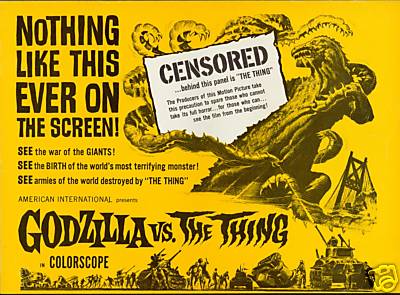
It's true, there is "nothing like [that] ever on the screen" because nothing in the movie has tentacles.
So, what's up with the vague, ambiguous title of Godzilla vs. The Thing? That title was only used for the American theatrical release, though, as all of the home video versions I can recall went by Godzilla vs. Mothra. To make it even more (slightly) confusing, the Japanese title is Mothra vs. Godzilla. I'm not exactly sure why Toho started putting their leading monster in the secondary title position. Godzilla doesn't even enjoy top billing until 1966's bout with Ebirah. I'm not complaining about this; it just seems a bit odd. But it could also be that the Japanese aren't as particular about this kind of thing like American film marketing. I've watched the Japanese version on Classic Media's outstanding DVD before, but having grown up on the English-dubbed version it's nearly impossible not to long for that version and that one only. The funny thing (no pun intended, really) is that I'd only ever seen it as Godzilla vs. Mothra, but this AIP print comes with the vs. The Thing title.
Amazingly, the American version hardly messes with the Japanese cut much. Usually, the American distributors will consider entire re-shoots around SPFX footage, or at the very least they'll trim the film down to the bare essentials to maximize monster time. Here, they not only leave the film almost totally intact, but they actually added a new scene of Godzilla being showered with missiles. The Frontier Missile sequence, featuring the American military taking control of the war against Godzilla, is full of great man-in-suit footage. Just as it sounds, it basically Godzilla stomping around while the military tries in vain to take him out. Of course, we know he ends up demolishing everything in his way because that's kinda his thing, but the fact that the U.S. got additional footage that the Japanese market didn't is pretty huge. This version was also released a scant 4 months after its Japanese debut, whereas all previous films had taken at least a year (or more) to be readied for stateside consumption.
The film's plotting doesn't deviate too far from the now-standard Godzilla formula. As per usual, G wakes up from hibernation - here he's buried underground and appears from beneath a quaking plot of land - and he just starts stomping Japan into the ground. Unlike in previous films, here he doesn't have any commute since his sleeping quarters were conveniently located in a coastal city. Just before Godzilla wakes, though, a giant egg had washed up on the beach. A massive egg capable of providing omelets for half the population. But this egg contains some special larva, the offspring of Mothra. You know Mothra - giant moth, worshiped by native islanders and adored by two diminutive princesses who have a penchant for singing her praises constantly. My dad heard that song so many times when I was a kid that he can still sing it (albeit mockingly) to this day. Some businessmen try to buy the egg and set up an amusement park around it, completely ignoring the fact that it's an egg, which means it will either hatch something or rot away in the sun. Either way, not exactly a sound business model for generating revenue. It also doesn't help that one of the main dudes in charge looks like Hitler's long-lost Japanese brother.
It's true, there is "nothing like [that] ever on the screen" because nothing in the movie has tentacles.
Amazingly, the American version hardly messes with the Japanese cut much. Usually, the American distributors will consider entire re-shoots around SPFX footage, or at the very least they'll trim the film down to the bare essentials to maximize monster time. Here, they not only leave the film almost totally intact, but they actually added a new scene of Godzilla being showered with missiles. The Frontier Missile sequence, featuring the American military taking control of the war against Godzilla, is full of great man-in-suit footage. Just as it sounds, it basically Godzilla stomping around while the military tries in vain to take him out. Of course, we know he ends up demolishing everything in his way because that's kinda his thing, but the fact that the U.S. got additional footage that the Japanese market didn't is pretty huge. This version was also released a scant 4 months after its Japanese debut, whereas all previous films had taken at least a year (or more) to be readied for stateside consumption.
The film's plotting doesn't deviate too far from the now-standard Godzilla formula. As per usual, G wakes up from hibernation - here he's buried underground and appears from beneath a quaking plot of land - and he just starts stomping Japan into the ground. Unlike in previous films, here he doesn't have any commute since his sleeping quarters were conveniently located in a coastal city. Just before Godzilla wakes, though, a giant egg had washed up on the beach. A massive egg capable of providing omelets for half the population. But this egg contains some special larva, the offspring of Mothra. You know Mothra - giant moth, worshiped by native islanders and adored by two diminutive princesses who have a penchant for singing her praises constantly. My dad heard that song so many times when I was a kid that he can still sing it (albeit mockingly) to this day. Some businessmen try to buy the egg and set up an amusement park around it, completely ignoring the fact that it's an egg, which means it will either hatch something or rot away in the sun. Either way, not exactly a sound business model for generating revenue. It also doesn't help that one of the main dudes in charge looks like Hitler's long-lost Japanese brother.
With Godzilla on the move, and the fate of Mothra's egg in question, our fearless heroes/heroine - this time around it's a couple of journalists - call upon the tiny twins, known as Shobijin, to get Mothra to the mainland. Only problem is, Mothra has seen better days. She's an active senior looking forward to a few golden years before packing up her cocoon and jettisoning off the Moth Heaven. It's not meant to be, however, and soon Mothra is headed to Japan for a one-on-one showdown with Godzilla. And the Big G, being rightly pissed off for no apparent reason, promptly smacks her ass down. Oh noes! There goes any hope for saving Japan... unless a lot of tribal song and dance can get Mothra's egg to hatch! Of course, it does and out pop twins. I always liked Mothra's larva when I was younger. They seemed like such unlikely adversaries for Godzilla, but managed to hold their own impressively well considering they were literally just born and have virtually no defenses outside of tail biting and shooting silly string-like webbing from their mouths.
A monster's humiliation, immortalized in plastic for all to see.
One area in which the film gets consistent props is for the suit design. This one, intended to be different from the Kingoji suit used against King Kong, was dubbed (appropriately enough) the Mosugoji. Godzilla's was given a less reptilian appearance, in addition to enjoying less bulk (battling a big ape must be a killer workout), a smaller snout, and an overall visage that is more menacing and "evil" versus the "big dinosaur" look he got last time around. Out of all the suits Godzilla films employed during the Showa era, I would have to agree that this one is among the best. Slight modifications were made for the next two subsequent films, after which Godzilla got some revamps that - quite honestly - made him look like a giant Sesame Street character.
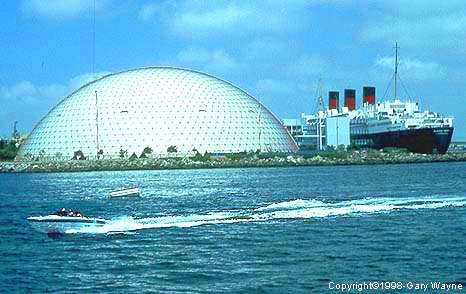
To end on a somewhat amusing anecdote, growing up in Southern California my father always used to point out the massive hangar which houses the Spruce Goose because it resembles Mothra's egg from far away. We lived about 50-ish miles from Long Beach, and on a clear day it looked just like that giant egg was sitting by the shore, waiting to hatch. All these years later I still think that every time I see it while driving.
Labels:
1964,
daikaiju,
egg,
eiji tsuburaya,
film,
godzilla,
godzilla vs. the thing,
ishiro honda,
japan,
kaiju,
larva,
monster,
mosugoji,
mothra,
mothra vs. godzilla,
review,
toho,
tomoyuki tanaka
Wednesday, July 24, 2013
GODZILLA-THON #2 - Godzilla Raids Again (1955)
Godzilla's second foray into theaters occurred immediately following his debut. Toho, eager as any Western Hollywood studio, wanted to capitalize on the success of Godzilla's popularity, so this sequel went into production for release in 1955. That might sound ambitious for the '50s - long before the '80s heyday of popping out horror sequels quicker than a child gestates - but then I'd be quick to point out that RKO shot and released Son of Kong in the same year (1933) that the original came out! And they had to do stop-motion animation, too! So, getting Haruo Nakajima to hop inside their rubber suit once again and stomp miniatures wasn't such an impossible task. But, this being a sequel and all, the stakes had to be raised. Unfortunately, director Inoshiro Honda declined to return - can't blame the guy for wanting to go out on a high note - and composer Akira Ifukube also was unavailable. In their place, director Motoyoshi Oda (who was up to that point mainly known for a Japanese film influenced by The Invisible Man called Tomei Ningen) took over the reigns, while score composition was handled by then-new composer Masaru Satoh. This was actually the first score he ever recorded for a film. He would later gain recognition for his work with Akira Kurosawa.
Enter Anguirus. Or Angillas. Or Anguilas. Of all the monsters in Toho's roster, Anguirus seems to have the most "AKA"s. Toho says Anguirus, so that's what I call him. This spiky Ankylosaurus-looking beast was introduced initially as Godzilla's foe, though later films would see him often aligning with Godzilla, creating one of the most badass tag teams since Hulk Hogan and The Ultimate Warrior decided to join forces.
One quick note on the American version of Godzilla Raids Again... The original intention was for an American distributor, AB-PT productions, to film completely new footage around all of the existing monster scenes. This new film, to be titled The Volcano Monsters, would have shrunk the scale of Godzilla and Anguirus to dinosaur size. Additionally, Godzilla was not going to be shown breathing fire, and Toho even sent over monster suits for the production. Thankfully, the production company went out of business the following year, effectively cancelling the entire production. As bad as it sounds, some part of me is morbidly curious to know how this project would have looked fully realized. The film still got messed with to hilarious results, though. The American version re-christened Godzilla as Gigantis - giving the film its name, Gigantis, the Fire Monster - and he was even given Anguirus' roar! Apparently the distributors were stupid enough to think audiences wouldn't notice Godzilla being passed off as an entirely new monster. The only silver lining to this version - and it's minor - is George Takei, he of Star Trek fame, provided dubbing for one of the actors.
Enter Anguirus. Or Angillas. Or Anguilas. Of all the monsters in Toho's roster, Anguirus seems to have the most "AKA"s. Toho says Anguirus, so that's what I call him. This spiky Ankylosaurus-looking beast was introduced initially as Godzilla's foe, though later films would see him often aligning with Godzilla, creating one of the most badass tag teams since Hulk Hogan and The Ultimate Warrior decided to join forces.
The film doesn't offer a whole lot in the way of plot, or even characters we feel much for. Certainly not after Gojira offered up a top-notch cast of memorable characters - Serizawa has a friggin' eye patch, who doesn't remember that? The only returning cast member, other than Haruo Nakajima as Godzilla, is Takashi Shimura returning as Prof. Yamane. He's not here to do much more than remind people how much Godzilla fucked up Japan before, and that this is likely the first Godzilla's relative who is now awake and pissed off. Only this time, instead of smashing the crap out of fishing villages and eating virgin sacrifices he's focused on battling Anguirus. Which, I suppose, still means that half of Japan is gonna get annihilated. The two of them do more or less use the harbors of Japan as makeshift wrestling mats.
As for the human element, it's far less engaging this time around. We spend most of the film with two pilots who are tasked with hunting for schools of fish from the air. They first spot Godzilla and Anguirus already embroiled in a heated battle on some remote island before the monsters both fail to notice the impending cliff and into the drink they go. One of the pilots recognized Godzilla, though, so finally the Japanese can make preparations to ward off the beast.
Oh, man, they do such a good job, too. Although he was ignored in the first film, the army listens to Prof. Yamane this time and prepare a series of flares designed to lure G away from the coastal cities. After all, like a large, scaly moth the Big Guy is drawn to lights, so a few well-placed flares and he'll be out of here in no t-
Fuck. A group of convicts just engineered the easiest prison truck escape ever, hijacked a gasoline truck (the most logical of vehicles to employ during a high speed chase), and lost complete control of it, slamming into a refinery that just happens to be right by the coast.
Aaaaaaannnnnddddd now Godzilla is coming back to obliterate everything. So is Anguirus, who apparently can't resist the urge to add some theatricality to his rematch by fighting next to the massive fire. Bad move. Doesn't he know Godzilla breathes fire? He finds out, but only after Godzilla bites through his neck and kicks his dying ass into a drainage ditch. Then Anguirus gets blasted with the famous atomic breath, effectively burning him to death. Don't feel too bad, he gets to make up for losing later in the series by appearing in several pictures.
"C'mon, just one hug..."
The Godzilla suit underwent some minor cosmetic changes for this entry. As everyone should already know, the suit quite literally has been altered in one way or another for every single film in the series. This time around Godzilla has a more dinosaur-like head and his ears seem a bit more pronounced. This is the closest the suit has ever looked to the original, as the next film - King Kong vs. Godzilla - saw a major makeover for the Big Guy. Once again, Haruo Nakajima donned the rubber casket, though modifications had been made to ensure a modicum of comfort over the previous design.
So, how do they off Godzilla this time? You can't kill him again - not because they couldn't write a way to kill him, but think about the sequel potential! They had to just put him on ice, literally. Our two ace pilots - Tsukioka and Kobayashi - spend almost 15 minutes bombing him on an icy island with the intent of covering him with enough ice so that he can't escape. This is not taking into consideration the fact that he's a massive, powerful lizard that can likely just stomp his way out. And, you know, he does breathe fire! But, sure, whatever. Gotta wrap the film up somehow, right? Anyway, these two guys drop more bombs than a WWII fighter pilot before this terrible ice plan finally works, rendering our titular monster a kaiju-sicle.
"I'll, uh, just be polite and stand here while you guys do your thing."
And that's how he stayed for 7 long years, until another monster King by the name of Kong came knocking at his door.
One quick note on the American version of Godzilla Raids Again... The original intention was for an American distributor, AB-PT productions, to film completely new footage around all of the existing monster scenes. This new film, to be titled The Volcano Monsters, would have shrunk the scale of Godzilla and Anguirus to dinosaur size. Additionally, Godzilla was not going to be shown breathing fire, and Toho even sent over monster suits for the production. Thankfully, the production company went out of business the following year, effectively cancelling the entire production. As bad as it sounds, some part of me is morbidly curious to know how this project would have looked fully realized. The film still got messed with to hilarious results, though. The American version re-christened Godzilla as Gigantis - giving the film its name, Gigantis, the Fire Monster - and he was even given Anguirus' roar! Apparently the distributors were stupid enough to think audiences wouldn't notice Godzilla being passed off as an entirely new monster. The only silver lining to this version - and it's minor - is George Takei, he of Star Trek fame, provided dubbing for one of the actors.
"Watch out, it's Godzilla... and he looks fabulous!"
Saturday, July 20, 2013
GODZILLA-THON #1 - Gojira (1954)
Godzilla fever has been running high thanks to Gareth Edwards' upcoming 2014 reboot invading Comic Con this weekend, so it seemed like as good a time as any to re-watch all of Toho's 28 entries in the historic franchise.
For a bit of backstory, I'm essentially the definition of a dyed-in-the-wool Godzilla fan. As far back as I can remember, I've been fascinated with big monster movies, or daikaiju for the initiated. I've got the worn-out VHS tapes to prove it. I would curate my own movie marathons, piling up my store bought (and bootlegged) Big G tapes to ready myself for an entire day of nerding the fuck out. All at the age of 6. Few things made me happier than watching man-in-suit movies until my eyelids gave out and I was carried off to bed. I owned every single film Toho had released up to that point - this would've been around 1987/88 - which explains why my favorite G films come from the earlier Showa era of the series. In fact, aside from Godzilla 1985 I didn't see any Heisei era films until the mid-to-late '90s. This is partly due to Toho doing a shitty job of giving them proper VHS released in America... and partly due to my entering high school and maintaining a social life.
But I digress. The point I'm getting at here is that despite all of my constant Godzilla-thons, I never watched the original film much. I watched it plenty to know it well enough. The black & white presentation never bothered me as a kid. I gravitated towards the more monster-heavy entries in the series, like 1974's Godzilla vs. Mechagodzilla. Plus, let's face it - Toho might've done a commendable job on the suit itself but that puppet used for close-up shots hardly looked menacing. And this was also the American-edited 1956 version, called Godzilla, King of the Monsters, which eschewed virtually all of the somber mood and nuclear subtext of the Japanese version in order to give Perry Mason, er, Raymond Burr screen time as our man on the ground, journalist Steve Martin. Clearly, this was before the time of the Steve Martin, but the name confusion did turn up when the character was reprised for Godzilla 1985. There, they just called him "Steve" or "Mr. Martin", never a combination of the two. It isn't a bad film - especially to the non-critical mind of a kid - but since the original version was lovingly restored around 2004 people seem to deride it more than usual.
Back to the marathon. Criterion put out a sexy new edition of Gojira (1954) on Blu-ray. This edition fully blows the Classic Media Blu-ray release out of the water, with an improved picture (CM's release was 1080i), better audio, and a minor wealth of bonus material. Now, it should be noted that they didn't license any of the features found on the 2-disc DVD Classic Media released, so fans who own that edition would be wise to hang on to it. But if all you're concerned with is the a/v presentation, look no further than Criterion.
The film itself is clearly superior to the heavily-edited American version. As I stated earlier, the tone is much more serious and somber. Godzilla is an obvious allegory for the undersea nuclear testing being done around that time (and even more obviously, the bombing of Hiroshima and Nagasaki). He is presented as a force of nature, an unstoppable beast who only leaves the sea when his food source has been depleted due to deep-sea explosions. As gripping as the monster footage is, the story is compelling and humanistic. Professor Yamane (Takashi Shimura) desperately wants to study the beast, hoping that through science we can learn how Godzilla is impervious to atomic testing and conventional weaponry. But the military just wants to kill it, a task they continually fail at completing. They have to enlist the aid of Dr. Serizawa (Akihiko Hirata), a scientist who has developed a device - the Oxygen Destroyer - that can essentially liquefy oxygen, killing whatever is in its wake. He's reluctant to offer his aid, however, since he knows that as soon as his experiment is revealed men will want to harbor it for nefarious purposes. The pathos bleeds off the screen, elevating what could have easily been a simple monster-runs-amok film into something emotional and poignant.
Much - if not all - of the film's success is thanks to the triumvirate of technical innovation: director Inoshiro Honda, producer Tomoyuki Tanaka, and special effects supervisor Eiji Tsuburaya. Without delving too deeply into history that can be found elsewhere, it was Tanaka's idea to film the movie. The script went through many changes, as did the final design for Godzilla, which at one point was to be a monster with a mushroom cloud-shaped head (!). Finally, on their third attempt to create a useable sculpture, did Tsuburaya & Tanaka settle on the now-classic look. They still needed to put a man in that 200-lb. rubber suit, though. Enter Haruo Nakajima, who wore the bulky behemoth under stage lights with temperatures inside reaching 130 degrees Fahrenheit. He reportedly had a cup of sweat drained from the suit daily. The stiff rubber forced a more reptilian - and, thus, less human - style of movement because Nakajima was so restricted. Rumor has it the suit could stand on its own once he was out! Sounds like grueling work, but he took it all in stride without complaining. Nakajima did almost all of the suit work during the Showa era.
It's been said that a good score can dramatically help any movie, and the impressive orchestration of Akira Ifukube certainly does just that. This is the man who composed a large majority of Godzilla's most memorable themes. This score reciprocates the somber tone meant for the film, making it unique among his work on other Godzilla films since the mood never reached the emotional depths of this first picture. Ifukube would go on to score for Godzilla the rest of his career, finally stepping down after handling duties on Godzilla vs. Destroyer in 1995. Let's not forget he also gave the Big G his trademark roar, something achieved by rubbing a resin-coated glove over a contrabass string. Simple, effective, incredibly memorable.
I liken this inaugural Godzilla film to Rocky (1976) - hang on a sec, lemme finish - in that this was the launch pad used to gauge reaction and then plot ahead. Everyone seems to forget that Rocky loses in the first film, much like the Big G loses (even worse, really... he dies) here. But as Prof. Yamane said in the film, perhaps there are more of Godzilla's species out there, waiting to be woken up from continued testing.
Lucky for us, he was right.
For a bit of backstory, I'm essentially the definition of a dyed-in-the-wool Godzilla fan. As far back as I can remember, I've been fascinated with big monster movies, or daikaiju for the initiated. I've got the worn-out VHS tapes to prove it. I would curate my own movie marathons, piling up my store bought (and bootlegged) Big G tapes to ready myself for an entire day of nerding the fuck out. All at the age of 6. Few things made me happier than watching man-in-suit movies until my eyelids gave out and I was carried off to bed. I owned every single film Toho had released up to that point - this would've been around 1987/88 - which explains why my favorite G films come from the earlier Showa era of the series. In fact, aside from Godzilla 1985 I didn't see any Heisei era films until the mid-to-late '90s. This is partly due to Toho doing a shitty job of giving them proper VHS released in America... and partly due to my entering high school and maintaining a social life.
But I digress. The point I'm getting at here is that despite all of my constant Godzilla-thons, I never watched the original film much. I watched it plenty to know it well enough. The black & white presentation never bothered me as a kid. I gravitated towards the more monster-heavy entries in the series, like 1974's Godzilla vs. Mechagodzilla. Plus, let's face it - Toho might've done a commendable job on the suit itself but that puppet used for close-up shots hardly looked menacing. And this was also the American-edited 1956 version, called Godzilla, King of the Monsters, which eschewed virtually all of the somber mood and nuclear subtext of the Japanese version in order to give Perry Mason, er, Raymond Burr screen time as our man on the ground, journalist Steve Martin. Clearly, this was before the time of the Steve Martin, but the name confusion did turn up when the character was reprised for Godzilla 1985. There, they just called him "Steve" or "Mr. Martin", never a combination of the two. It isn't a bad film - especially to the non-critical mind of a kid - but since the original version was lovingly restored around 2004 people seem to deride it more than usual.
Back to the marathon. Criterion put out a sexy new edition of Gojira (1954) on Blu-ray. This edition fully blows the Classic Media Blu-ray release out of the water, with an improved picture (CM's release was 1080i), better audio, and a minor wealth of bonus material. Now, it should be noted that they didn't license any of the features found on the 2-disc DVD Classic Media released, so fans who own that edition would be wise to hang on to it. But if all you're concerned with is the a/v presentation, look no further than Criterion.
The film itself is clearly superior to the heavily-edited American version. As I stated earlier, the tone is much more serious and somber. Godzilla is an obvious allegory for the undersea nuclear testing being done around that time (and even more obviously, the bombing of Hiroshima and Nagasaki). He is presented as a force of nature, an unstoppable beast who only leaves the sea when his food source has been depleted due to deep-sea explosions. As gripping as the monster footage is, the story is compelling and humanistic. Professor Yamane (Takashi Shimura) desperately wants to study the beast, hoping that through science we can learn how Godzilla is impervious to atomic testing and conventional weaponry. But the military just wants to kill it, a task they continually fail at completing. They have to enlist the aid of Dr. Serizawa (Akihiko Hirata), a scientist who has developed a device - the Oxygen Destroyer - that can essentially liquefy oxygen, killing whatever is in its wake. He's reluctant to offer his aid, however, since he knows that as soon as his experiment is revealed men will want to harbor it for nefarious purposes. The pathos bleeds off the screen, elevating what could have easily been a simple monster-runs-amok film into something emotional and poignant.
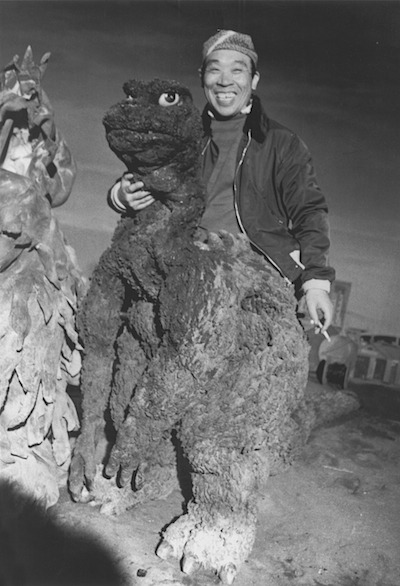
"Chicks dig the patch, right?"
Much - if not all - of the film's success is thanks to the triumvirate of technical innovation: director Inoshiro Honda, producer Tomoyuki Tanaka, and special effects supervisor Eiji Tsuburaya. Without delving too deeply into history that can be found elsewhere, it was Tanaka's idea to film the movie. The script went through many changes, as did the final design for Godzilla, which at one point was to be a monster with a mushroom cloud-shaped head (!). Finally, on their third attempt to create a useable sculpture, did Tsuburaya & Tanaka settle on the now-classic look. They still needed to put a man in that 200-lb. rubber suit, though. Enter Haruo Nakajima, who wore the bulky behemoth under stage lights with temperatures inside reaching 130 degrees Fahrenheit. He reportedly had a cup of sweat drained from the suit daily. The stiff rubber forced a more reptilian - and, thus, less human - style of movement because Nakajima was so restricted. Rumor has it the suit could stand on its own once he was out! Sounds like grueling work, but he took it all in stride without complaining. Nakajima did almost all of the suit work during the Showa era.
"Godzilla - did the Oxygen Destroyer really kill him... or was it cancer?"
It's been said that a good score can dramatically help any movie, and the impressive orchestration of Akira Ifukube certainly does just that. This is the man who composed a large majority of Godzilla's most memorable themes. This score reciprocates the somber tone meant for the film, making it unique among his work on other Godzilla films since the mood never reached the emotional depths of this first picture. Ifukube would go on to score for Godzilla the rest of his career, finally stepping down after handling duties on Godzilla vs. Destroyer in 1995. Let's not forget he also gave the Big G his trademark roar, something achieved by rubbing a resin-coated glove over a contrabass string. Simple, effective, incredibly memorable.
I liken this inaugural Godzilla film to Rocky (1976) - hang on a sec, lemme finish - in that this was the launch pad used to gauge reaction and then plot ahead. Everyone seems to forget that Rocky loses in the first film, much like the Big G loses (even worse, really... he dies) here. But as Prof. Yamane said in the film, perhaps there are more of Godzilla's species out there, waiting to be woken up from continued testing.
Lucky for us, he was right.
Labels:
1954,
1956,
big g,
criterion,
daikaiju,
eiji tsuburaya,
film,
godzilla,
gojira,
ishiro honda,
japan,
kaiju,
man in suit,
monster,
raymond burr,
review,
serizawa,
tomoyuki tanaka
Subscribe to:
Posts (Atom)